By Tim Witherspoon Jr.
7 min read
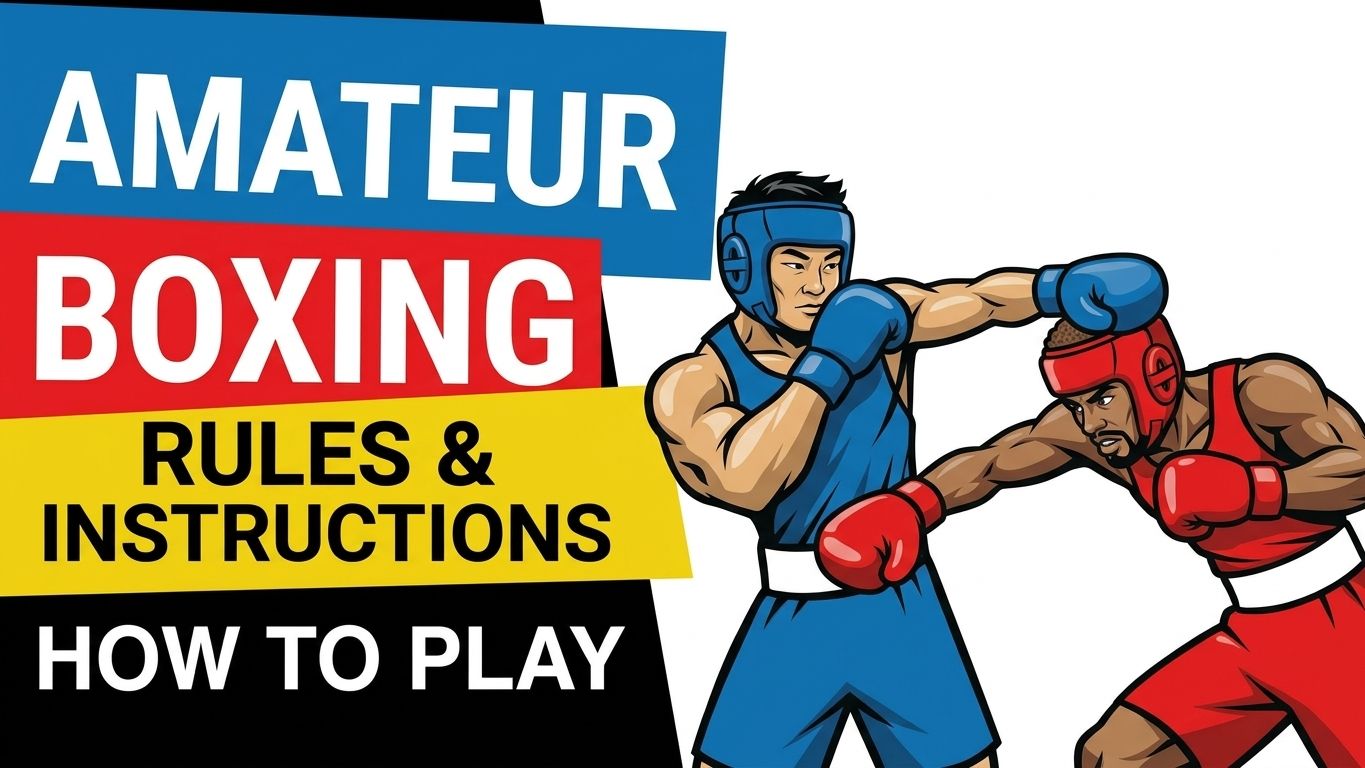
Amateur boxing rules explained in short: bouts are typically three rounds, scored by judges using a ten-point must system, with a mouthguard mandatory and headgear required in most divisions. Competitors must register with the national governing body, pass a medical, and hold a record book. Amateur boxing prioritises clean, controlled scoring punches and technical skill over raw power.
Our coaches at Witherspoon Boxing + Fitness — the boxing gym Bristol PA has trusted for two generations — walk members through all of this when they decide to compete. Here is the orientation.
Important: Rules Vary
Amateur rules differ by age division, by state athletic commission, and by sanctioning body. Round lengths, headgear requirements, and bout limits are not identical across every category or competition.
Everything below describes the general structure. For the specific rules that apply to you, check with USA Boxing and with your coach. Do not rely on any third-party summary, including this one, for competition decisions.
Amateur vs Professional — The Core Differences
| Feature | Amateur | Professional |
|---|
| Rounds | Typically 3 | 4 to 12 |
| Round length | Usually 2 to 3 minutes | 3 minutes |
| Headgear | Required in most divisions | Not worn |
| Glove size | Larger, varies by division | 8 to 10 oz typically |
| Emphasis | Clean scoring punches, technique | Damage and dominance |
| Weigh-in | Day of competition | Usually day before |
| Weight limits | Minimum and maximum | Maximum only |
| Medical requirements | Annual physical plus pre-bout checks | Extensive licensing medicals |
| Record keeping | Passbook or digital record | Commission licensing |
That difference in emphasis matters most. Amateur judging rewards precise, clearly landed punches rather than power, which is why technical boxers often do very well in the amateur ranks.

How Amateur Bouts Are Scored
Amateur boxing moved to a professional-style ten-point must system in 2013, replacing the computerised punch-count scoring that had been widely criticised since the late 1980s. Each round is now scored by ringside judges using the familiar 10-9 or 10-8 format.
| Score | Meaning |
|---|
| 10-9 | Clear winner of the round |
| 10-8 | Dominant round, or a knockdown |
| 10-7 | Overwhelmingly one-sided round |
What Judges Are Looking For
- Clean punches landed with the knuckle part of the glove on legal target areas
- Ring generalship — who is dictating the pace and position
- Effective aggression, not simply moving forward
- Defensive skill and tactical superiority
Note the first point. A punch that is blocked, lands with the wrist or the inside of the glove, or hits a non-scoring area does not count — however impressive it looked.
Ways a Bout Can End
- Decision — the most common outcome by a wide margin
- Referee stops contest (RSC) — when one boxer is outclassed or unable to continue safely
- Knockout or technical knockout — relatively rare in amateur boxing
- Disqualification — for repeated or serious fouls
- Walkover — opponent does not appear or fails the weigh-in
- Withdrawal — injury or a corner stopping the bout
Referees stop amateur bouts earlier than professional ones. That is deliberate, and it is one of the reasons amateur boxing is considered the safer format.
Mandatory Equipment
| Item | Requirement |
|---|
| Mouthguard | Mandatory. The round cannot begin without it |
| Headgear | Required in most divisions — check your category |
| Gloves | Approved gloves, size set by division |
| Hand wraps | Required, inspected before the bout |
| Groin protector | Required for male boxers |
| Chest guard | Required for female boxers in many competitions |
| Boxing attire | Two-piece suit with colour requirements for identification |
| Boxing shoes | Required — no street trainers in competition |
On headgear specifically: elite men stopped wearing it in Olympic competition from 2016, while women continued to. USA Boxing requirements differ across divisions, so confirm what applies to your category rather than assuming.
Our guides on boxing mouthguard and boxing equipment for beginners cover the gear side in more detail.

Common Fouls
- Hitting below the belt
- Hitting behind the head or on the back of the neck
- Holding, grabbing, or excessive clinching
- Hitting with the inside of the glove, wrist, or elbow
- Pushing, shouldering, or headbutting
- Turning your back on your opponent
- Deliberately spitting out the mouthguard
- Hitting an opponent who is down or rising
- Talking during the bout
- Ignoring the referee’s instructions
Referees issue warnings before deducting points, and persistent fouling results in disqualification.
Age Divisions
| Division | General Description |
|---|
| Bantam, Intermediate, Junior | Younger age categories with shorter rounds and stricter protections |
| Youth / U19 | Older teenage competitors |
| Elite | The open adult category |
| Masters | Generally boxers aged 41 and above, with shorter rounds and 16 oz gloves |
Amateur Boxing Rules Explained – Masters boxing is worth knowing about if you assumed competition was only for people in their twenties. It has its own rules, age-matching requirements, and weight classes.
How to Register and Compete
- Train consistently first. Two to three years of coached training before a first bout is typical.
- Join a registered gym with a coach who can sanction and corner you.
- Register with USA Boxing. Membership includes your competition record.
- Pass an annual physical from a qualified physician.
- Meet minimum bout requirements for the competitions you want to enter.
- Make weight at the day-of weigh-in, within your division’s minimum and maximum.
- Pass the pre-bout medical at the event itself.
Your coach handles most of the administrative side. What you handle is turning up prepared.

A Realistic Word on Readiness
Nobody competes after six months. Before a first bout, you need technique that holds up under pressure, reliable defense, conditioning for three hard rounds, and a meaningful amount of supervised sparring.
Our coaches will tell you honestly when you are ready, and equally honestly when you are not. That second conversation protects you far more than the first one flatters you.
If you are considering competing, speak to your doctor about the medical requirements and about whether competition is appropriate for your individual health situation.
You Do Not Have to Compete
Worth saying plainly. The overwhelming majority of our members never enter a bout and never intend to. Sparring itself is optional, supervised, and grouped strictly by experience.
People train here for fitness, stress relief, confidence, and the skill itself. Boxing and fitness work perfectly well together without anyone ever stepping into a sanctioned competition.
Training Toward Competition in Bucks County
The boxing classes Bucks County members rely on build the full pathway, whether or not you ever compete:
- Beginner Boxing — Mon/Wed 9:00 AM & 5:00 PM, Fri 9:00 AM, Sat 9:00 AM
- Advanced Boxing — Mon/Wed 6:00 PM, Sat 9:00 AM
- Adult Boxing — Tue/Thu 12:00 PM
- Women’s Boxing — Tue/Thu 7:00 PM, Sat 11:00 AM
- Sparring Lab — Mon/Wed 7:00 PM, Sat 10:00 AM
- Strength & Strike — Tue/Thu 6:00 AM
- Kids Boxing (Ages 6–12) — Mon/Wed 7:00 PM, Tue/Thu 6:00 PM
- Recovery & Mobility — Sun 9:00 AM
Our youth boxing classes are entirely non-contact, and young athletes only progress toward competition through direct conversation with parents. See the full weekly schedule.
Our staff is led by Tim Witherspoon Jr., and the Witherspoon family has competed at the professional level since the 1970s. Questions about matchmaking, registration, and what competing actually involves get answered by people who have lived it. Read more on our about us page or see the gym in our gallery.
Anyone searching learn boxing near me in lower Bucks County will find a genuine boxing fitness center here, with a boxing training for beginners program that starts from zero.

Frequently Asked Questions
How many rounds is an amateur boxing match?
Typically three, with length varying by age division and competition. Confirm the format for your category with USA Boxing.
How is amateur boxing scored?
Using a ten-point must system since 2013, with judges scoring rounds 10-9 or 10-8 based on clean punches landed, ring generalship, effective aggression, and defense.
Is headgear required in amateur boxing?
In most divisions, yes. Elite men stopped wearing it in Olympic competition from 2016 while women continued to. Requirements vary, so check your division.
How do I register for amateur boxing?
Through USA Boxing, with membership, an annual physical, a registered coach, and a competition record.
How long before I can have my first bout?
Two to three years of consistent coached training is typical, though it depends entirely on the individual.
Can professionals compete as amateurs?
No. Amateur competitors generally cannot have competed professionally in any combat sport.
Is there an age limit for amateur boxing?
There are age divisions rather than a cutoff, including Masters categories generally for boxers aged 41 and above.
Do I have to compete to train at a boxing gym?
Not at all. Most members never compete and never intend to.
Start With the Fundamentals
Every competitor started as someone who could not throw a clean jab. Come try one free class, build the basics properly, and decide about competing somewhere down the line — or never. Both are fine.
Booking Is This Simple
| Step | What You Do |
|---|
| 1 | Click the red Apply Now button below |
| 2 | Fill in your name, email, and the class you like |
| 3 | We call you back and confirm your free first class |
That is it. Gloves provided. No experience needed. Just show up.
👊 APPLY NOW — BOOK YOUR FREE CLASS
Prefer to talk first? Call (215) 458-8773 or email info@witherspoonboxing.com.
You can also message us on our contact page, read our story on about us, check gym updates in news, or browse more guides on the blog.
Witherspoon Boxing + Fitness — 925 Canal Street, Door 19, Bristol, PA 19007 — Bringing Out Everyone’s Inner Champion.


 Free every week