
Flexibility is one of the most consistently neglected physical qualities among boxing practitioners at every experience level — and one of the most impactful when developed deliberately and maintained consistently. This complete boxing flexibility training guide from the coaches at Witherspoon Boxing & Fitness in Bristol Borough, PA covers exactly what flexibility means for boxing performance, which specific flexibility qualities boxing demands, and the precise training approaches that Tim Witherspoon Jr. and his coaching team use to develop and maintain flexibility in every member of this premier boxing gym in Bristol PA across all program levels.
Flexibility in boxing is not about achieving yoga-level splits or extreme joint range of motion. It is about developing the specific mobility in the hips, shoulders, thoracic spine, and ankles that allows correct boxing technique to be executed without movement restriction — and maintaining that mobility under the repeated loading of training sessions that progressively stiffen the muscular and connective tissue structures involved. Learn about the coaching foundation on the about us page. The American College of Sports Medicine identifies sport-specific flexibility training as a critical component of athletic development programs — with restricted mobility in key joints directly limiting technique quality, power expression, and injury resilience in combat sports athletes at every competitive level.
Why Flexibility Matters Specifically for Boxing Performance
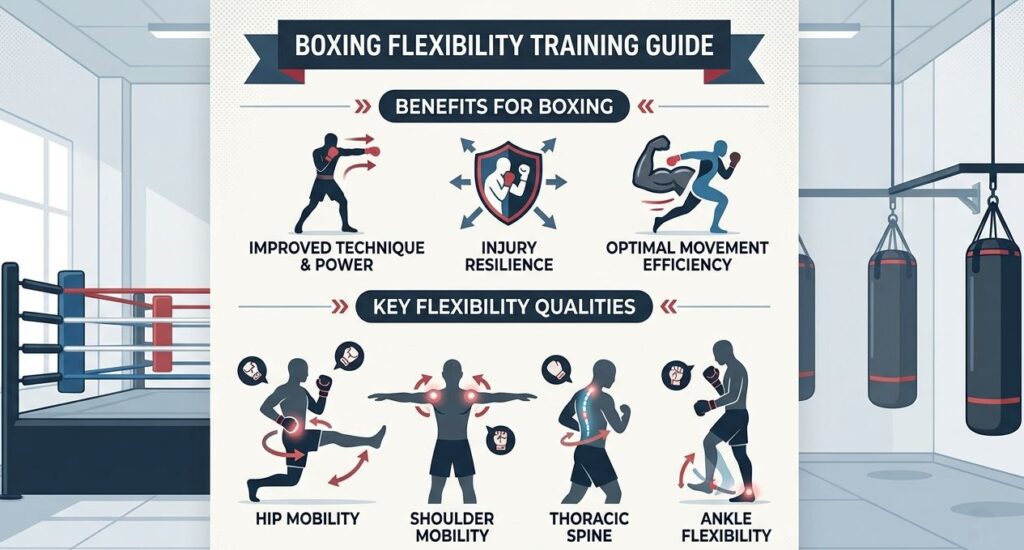
Before diving into the specific drills and protocols of this boxing flexibility training guide, understanding precisely why flexibility matters for boxing performance clarifies which mobility qualities deserve priority in training at Witherspoon Boxing & Fitness. Boxing technique makes specific mobility demands that general fitness flexibility training does not address specifically enough to be adequate preparation for the movement requirements of boxing classes in Bucks County.
Hip rotation flexibility directly determines how fully a boxer can rotate through the cross and hook — restricted hip rotation produces punches that are arm-driven rather than body-driven, dramatically reducing power output regardless of upper body strength development. Thoracic spine rotation mobility determines how completely the upper back rotates to contribute to punching power and defensive head movement — stiff thoracic spines limit combination fluency and force practitioners to compensate with excessive shoulder movement that reduces both power and technique quality. Shoulder mobility determines the full range through which punches travel and the effectiveness of defensive arm movement — restricted shoulder mobility produces stiff, mechanical combination work that lacks the fluid, natural quality of well-coached boxing technique.
Ankle and hip flexor flexibility determines the quality of boxing footwork — allowing the low, athletic stance that effective boxing movement demands without the physical discomfort that progressively tightens practitioners out of their correct stance position over the course of a training session. Check how flexibility training is integrated into class programming on the schedule page.
The Two Types of Flexibility Training Every Boxer Needs
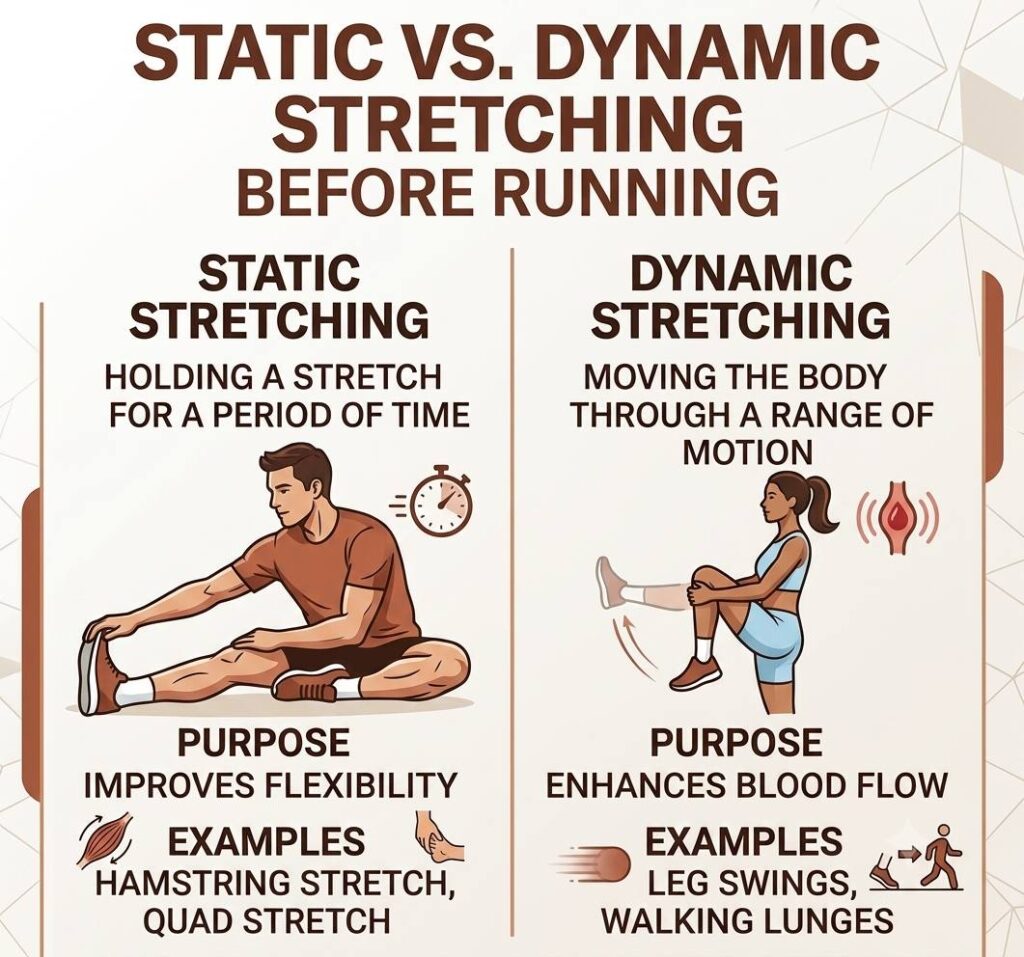
This boxing flexibility training guide distinguishes between two fundamentally different types of flexibility training — dynamic flexibility training performed before sessions and static flexibility training performed after sessions — because each serves a different physiological purpose and produces different outcomes when applied correctly. Coaches at Witherspoon Boxing use both types deliberately within every session structure, ensuring that each member benefits from the full flexibility development picture rather than only the type most popularly associated with stretching.
Dynamic flexibility training — performed during the warm-up phase of every session at this boxing fitness center — uses controlled, rhythmic movement through progressively larger ranges of motion to prepare joints and muscles for the demands of training without the performance-impairing effects that static stretching before exercise produces. Static flexibility training — performed during the cool-down phase after the training session is complete — uses sustained held positions to develop long-term flexibility improvements by elongating connective tissue structures that have been loaded and shortened during the session. Both types are essential components of this boxing flexibility training guide — dynamic for session preparation, static for long-term flexibility development. Explore flexibility training sessions through the gallery.
Dynamic Flexibility Drills for Pre-Session Preparation
The dynamic component of this boxing flexibility training guide consists of the specific movement-based mobility drills that Witherspoon Boxing coaches incorporate into every warm-up sequence across all program levels. These drills prepare the specific joints and movement patterns involved in boxing training without reducing the explosive muscle performance that high-intensity bag work and conditioning demand.
Hip circles and leg swings are the foundational dynamic flexibility drills of this boxing flexibility training guide for hip mobility development. Standing hip circles — slow, controlled full-circle movements of each hip through its complete range of motion in both directions — lubricate the hip joint, activate the hip rotator muscles, and progressively expand the available range for the rotation demands of cross and hook punching. Forward and lateral leg swings, performed against a wall for balance, develop the dynamic hip flexor and hip abductor flexibility that boxing footwork’s directional movement demands.
Ten repetitions in each direction before every session at this boxing gym in Bristol PA produces measurable improvements in punching rotation quality within four to six weeks of consistent application.
Thoracic rotation drills address the single most commonly restricted boxing flexibility quality in adult practitioners — thoracic spine rotation. Performed seated or in a hands-and-knees position, thoracic rotations involve placing one hand behind the head and rotating the elbow toward the ceiling while the opposite hand stabilizes the lower back — isolating thoracic rotation from lumbar movement. Ten controlled rotations in each direction before every session progressively unlock the mid-back mobility that contributes to punching power, defensive head movement, and the fluid, natural combination quality that coaches at Witherspoon Boxing identify as the clearest technical marker of adequate thoracic flexibility.
The National Strength and Conditioning Association identifies thoracic mobility training as the highest-priority flexibility intervention for practitioners in rotational sports including boxing, tennis, and golf. Follow flexibility training content on the blog.
Shoulder circles and arm swings prepare the shoulder complex for the mobility demands of punching — particularly the internal and external rotation demands of the cross and hook delivery patterns. Large, controlled arm circles in both directions, followed by cross-body arm swings that stretch the posterior shoulder capsule, activate the rotator cuff and shoulder girdle muscles while progressively increasing available shoulder range in both the throwing and recovery phases of each punch. Coaches at Witherspoon Boxing & Fitness include shoulder preparation in every warm-up sequence as an injury prevention priority — because shoulder impingement and rotator cuff irritation are among the most common training injuries in boxing practitioners who neglect pre-session shoulder mobility preparation.
Ankle circles and calf activation prepare the ankle joint for the balance demands of boxing stance and the explosive push-off requirements of footwork direction changes. Ten circles in each direction on each ankle, followed by slow controlled heel raises and toe raises, activate the plantar flexors and dorsiflexors that control ankle movement during every footwork pattern at this boxing and fitness center. Members who neglect ankle mobility preparation frequently experience difficulty maintaining the low, athletic boxing stance throughout full training sessions — as ankle stiffness progressively pushes them onto a higher, less stable foot position as sessions advance.
Static Flexibility Protocols for Long-Term Flexibility Development
The static component of this boxing flexibility training guide — the sustained held stretches performed during the cool-down phase after every training session at Witherspoon Boxing — is where the genuine long-term flexibility improvements that enhance boxing performance over months and years are developed. Static stretching performed after training — when muscles are fully warm, blood flow is elevated, and the nervous system’s stretch reflex threshold is temporarily elevated — produces elongation of both muscle fiber and connective tissue that persists into subsequent training sessions and compounds progressively over consistent weeks of application.
The hip flexor stretch is the most important static flexibility priority in this boxing flexibility training guide for most adult practitioners of boxing training for beginners programs at Witherspoon Boxing. Sedentary professional lifestyles produce chronic hip flexor shortening that tilts the pelvis anteriorly, limits hip extension, and directly restricts the hip rotation that punching power requires. A kneeling hip flexor stretch held for forty-five to sixty seconds per side after every session progressively reverses this shortening — improving both punching power and boxing stance quality as hip flexor mobility increases over weeks of consistent application.
The glute and piriformis stretch — performed by crossing one ankle over the opposite knee and gently pressing the crossed knee away while maintaining an upright spine — addresses the hip external rotator tightness that limits the internal rotation component of rear leg push-off in the cross punch. Tight piriformis muscles directly restrict the hip rotation fluency of power punching — making this stretch one of the highest-value static flexibility investments available to members pursuing punching power development alongside their boxing flexibility training guide implementation.
The chest and anterior shoulder stretch — performed by clasping hands behind the back, straightening the arms, and lifting while expanding the chest — addresses the anterior shoulder and chest tightness that rounded posture from sedentary daily life produces, directly improving punching range of motion and shoulder joint health under the repeated loading of training sessions. Held for forty-five seconds after every session, this stretch progressively reverses the postural restrictions that limit punch delivery range and defensive arm movement quality at this boxing gym in Bristol PA.
Youth boxing classes at the gym incorporate age-appropriate flexibility training with the same structural principles as adult programming — building the mobility habits that protect young athletes’ joint health throughout their entire athletic development. Questions about flexibility programming? Contact the team through the contact page. Stay connected through the news page.
Yoga at Witherspoon Boxing — The Ultimate Flexibility Development Complement
The most comprehensive flexibility development resource available to members of Witherspoon Boxing & Fitness alongside this boxing flexibility training guide is the yoga programming offered at this boxing fitness center in Bristol Borough. Yoga provides the most complete and most systematically progressive flexibility development available — addressing every flexibility quality that boxing demands through sequences specifically designed to develop the hip, shoulder, thoracic, and ankle mobility that this boxing flexibility training guide targets, alongside the mindfulness and breathing quality that enhance recovery and mental performance in boxing training simultaneously.
Members of Witherspoon Boxing who add two yoga sessions per week to their three boxing sessions consistently demonstrate superior flexibility development trajectories compared to members who rely on pre- and post-session stretching alone — producing measurably improved punching rotation quality, defensive movement fluidity, and stance maintenance over full training sessions within six to eight weeks of consistent yoga integration. The complete boxing and fitness programming at Witherspoon Boxing makes this flexibility development complement available within a single membership — eliminating the need for additional yoga studio memberships or separate facility visits.

Develop Real Boxing Flexibility at Witherspoon Today
This boxing flexibility training guide is most powerfully applied under the expert coaching available at Witherspoon Boxing & Fitness in Bristol Borough, PA — where Tim Witherspoon Jr. and his team integrate flexibility development deliberately into every session structure and provide the individualized coaching corrections that make flexibility training specifically relevant to each member’s technical development needs. Visit the schedule page and find your first class.
Click → Apply Now and start developing real boxing flexibility under expert coaching at Witherspoon Boxing Bristol PA today.