By Tim Witherspoon Jr.
7 min read
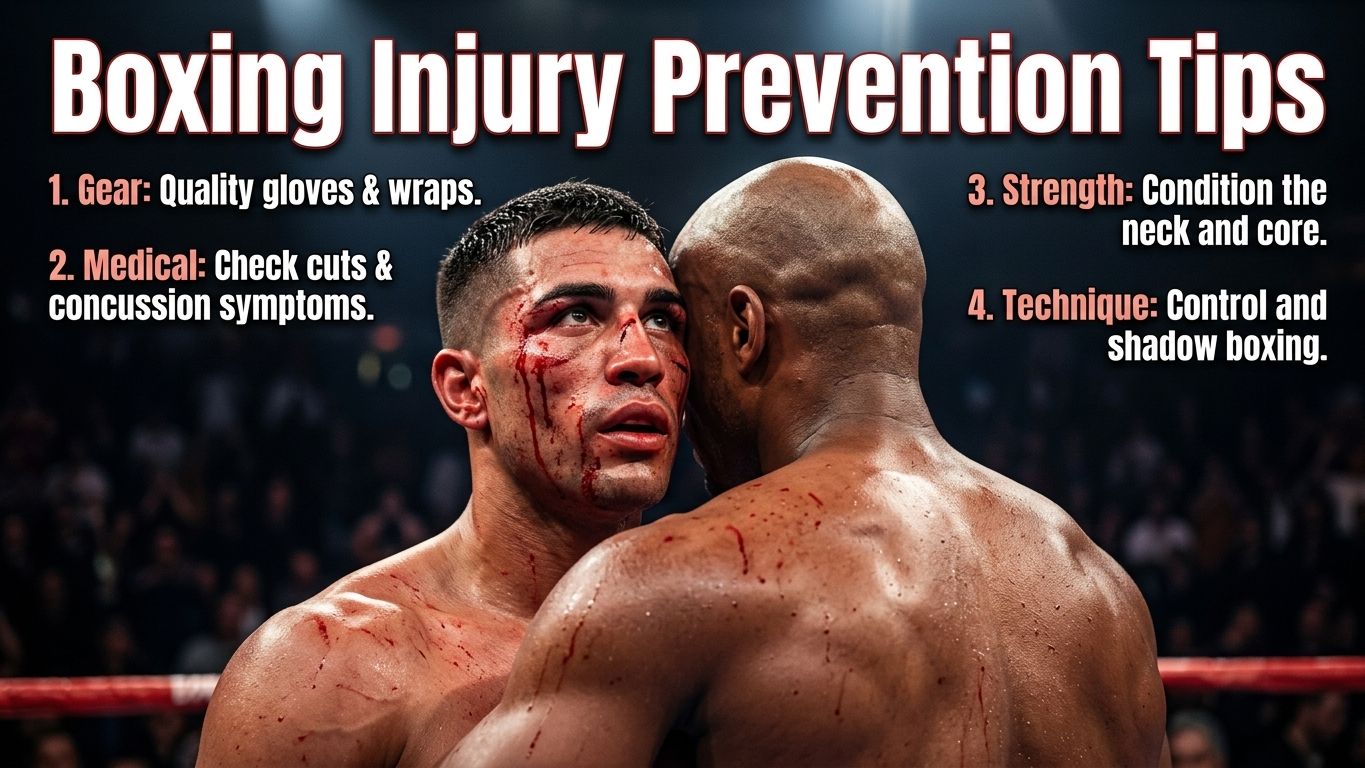
The most effective boxing injury prevention tips are simple: wrap your hands properly every session, never skip the warm-up, learn correct technique before adding power, build training volume gradually, and treat recovery as part of the program rather than an afterthought. Most boxing injuries come from doing one of those five things badly, not from the sport itself.
Our coaches at Witherspoon Boxing + Fitness — the boxing gym Bristol PA has trusted for two generations — see the same handful of preventable problems repeatedly. Here is how to avoid each one.
Where Boxing Injuries Actually Come From
For people training rather than competing, contact is rarely the cause. The usual culprits are far more mundane.
| Area | Common Problem | Usual Cause |
|---|
| Wrists and hands | Sprains, bruising, joint pain | Poor wrapping, bent wrist on impact |
| Shoulders | Strain, impingement-type discomfort | Overuse, poor warm-up, holding a guard while fatigued |
| Elbows | Hyperextension | Overextending punches, especially on a bag |
| Knees | Strain and general soreness | Pivoting on planted feet, poor footwear |
| Lower back | Tightness and strain | Weak core, leaning forward, poor stance |
| Ankles | Rolls and sprains | Poor footwork mechanics, unsupportive shoes |
Every item in that right-hand column is fixable. The American Academy of Orthopaedic Surgeons notes that proper technique, appropriate equipment, and adequate conditioning are central to preventing sports injuries — which is precisely what good coaching provides.
1. Wrap Your Hands — Every Single Session
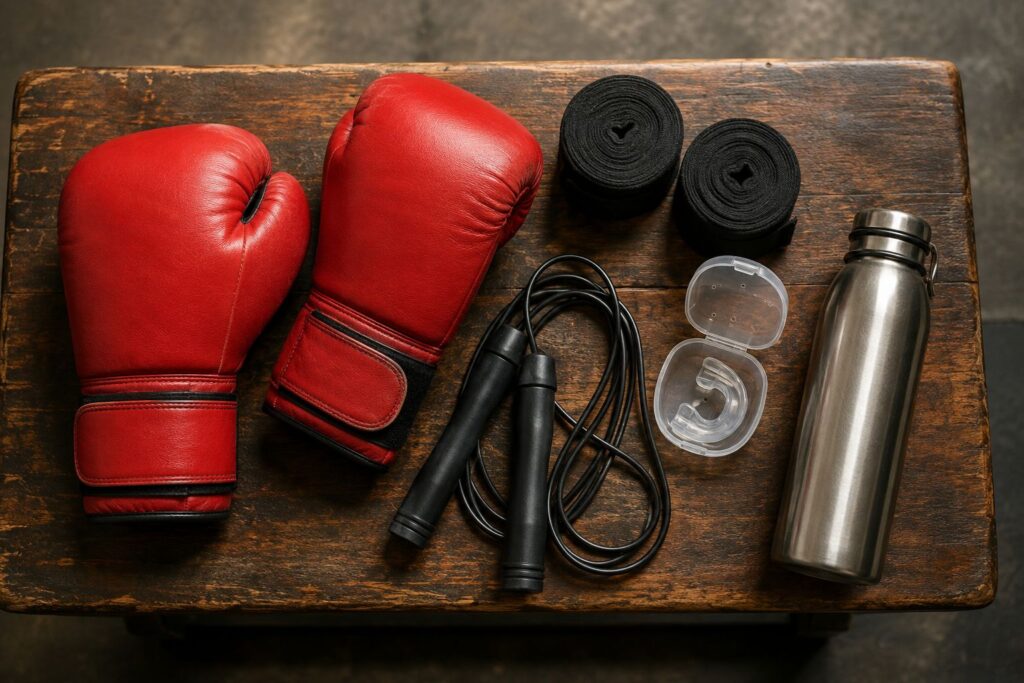
This is the single highest-return habit in boxing. Hand wraps compress the small bones of your hand and support your wrist through impact. Gloves are padding; wraps are the actual protection.
- Never train without them, even for a light session
- 180-inch wraps for most adults, 120-inch for smaller hands and kids
- Firm but not tight — you should not lose circulation
- Own two or three pairs so you always have a clean, dry set
- Learn it properly — a coach will teach you on day one
2. Keep the Wrist Locked Straight
A wrist that folds even slightly on impact is the most common route to injury in the sport. Contact is made with the front two knuckles, wrist straight and locked, forearm aligned behind the punch.
If your wrist aches after normal bag work, something is wrong. Stop and speak to a coach rather than training through it.
3. Warm Up Properly — Ten Minutes, Non-Negotiable
Cold shoulders and stiff hips are exactly where strains happen. A proper warm-up should include:
- Three to five minutes raising the heart rate — skipping or light movement
- Shoulder and arm circles through full range
- Hip and torso rotations
- Wrist and neck mobility
- Light shadow boxing at 50 percent to rehearse the movement patterns
Static stretching belongs at the end of a session, not the start. Before training, you want movement, not held positions.

4. Technique Before Power
Hitting hard with bad form is how you get hurt. Hitting correctly builds power safely as a by-product.
The faults that cause injuries are the same ones covered in our guide on common boxing mistakes beginners make — particularly bent wrists, leaning forward, and pivoting on planted feet. A solid boxing stance and guard prevents most of the rest.
5. Build Volume Gradually
| Stage | Sessions Per Week | Why |
|---|
| Weeks 1–4 | 2 | Let connective tissue adapt before adding load |
| Months 2–6 | 2–3 | Steady progression with full recovery |
| Beyond 6 months | 3–4 | Add one session at a time, hold for 3 weeks |
Muscles adapt faster than tendons and joints do. Jumping from zero to five sessions a week is how people end up injured in month two. The American College of Sports Medicine emphasises gradual progression as a core principle of safe training.
6. Wear the Right Shoes
Thick, cushioned running shoes with a raised heel make pivoting difficult and put rotational stress through your knees. Flat cross-trainers or boxing shoes let your foot turn cleanly.
This is one of the most overlooked causes of knee soreness in new boxers, and it is fixed by changing footwear rather than changing technique.
7. Strengthen What Supports You
- Core and obliques — protect your lower back through rotation
- Rotator cuff and upper back — support the shoulders that hold your guard
- Grip and forearms — stabilise the wrist on impact
- Glutes and legs — absorb and generate force in the stance
Our Strength & Strike sessions on Tuesday and Thursday at 6:00 AM and Bootcamp on Tuesday and Thursday at 6:00 PM cover exactly this supporting work.
8. Recovery Is Part of Training
Adaptation happens during rest, not during the session. Overtraining is one of the most reliable predictors of injury.
- At least one full rest day between hard sessions when starting out
- Sleep — the most underrated recovery tool there is
- Hydration before, during, and after training
- Mobility work — our Recovery & Mobility session runs Sunday at 9:00 AM
9. Know the Difference Between Soreness and Pain
| Normal | Stop and Speak to a Coach |
|---|
| Muscle soreness 24–48 hours after training | Sharp pain during a movement |
| General fatigue after a hard session | Joint pain in wrists, elbows, or knees |
| Tight shoulders after holding a guard | Pain that worsens as the session continues |
| Aching legs after footwork drills | Numbness, tingling, or swelling |
If you have an existing injury or health condition, check with your doctor before training and tell us what they said. Coaches scale sessions to the person in front of them.
Sparring Safety
Boxing Injury Prevention Tips-Sparring is optional at our gym and always supervised. When members do choose it, the rules are absolute: mouthguard and headgear mandatory, partners grouped strictly by experience, and intensity controlled by the coach.
The best protection in sparring is not equipment, though. It is defense. Learning to make punches miss through good head movement drills reduces the total impact you absorb far more than padding does.
Injury Prevention for Kids
Our youth boxing classes for ages 6 to 12 are entirely non-contact, with properly fitted youth gloves and wraps, structured warm-ups, and coach supervision throughout. Growing bodies need the same gradual-progression principle as adults, which is why we keep intensity age-appropriate.
Training Safely in Bucks County
The boxing classes Bucks County members rely on all include a structured warm-up, technical coaching, and a cool down:
- Beginner Boxing — Mon/Wed 9:00 AM & 5:00 PM, Fri 9:00 AM, Sat 9:00 AM
- Advanced Boxing — Mon/Wed 6:00 PM, Sat 9:00 AM
- Adult Boxing — Tue/Thu 12:00 PM
- Women’s Boxing — Tue/Thu 7:00 PM, Sat 11:00 AM
- Strength & Strike — Tue/Thu 6:00 AM
- Bootcamp — Tue/Thu 6:00 PM, Fri 10:00 AM
- Sparring Lab — Mon/Wed 7:00 PM, Sat 10:00 AM
- Recovery & Mobility — Sun 9:00 AM
See the full weekly schedule. Our staff is led by Tim Witherspoon Jr., and the Witherspoon family has competed at the professional level since the 1970s — two generations of experience in keeping people training rather than recovering. Read more on our about us page or see the gym in our gallery.
Anyone searching learn boxing near me across lower Bucks County will find a genuine boxing fitness center here, with a boxing training for beginners program built around correct technique from session one. Training safely is also what makes boxing and fitness sustainable over years rather than months.

Frequently Asked Questions
What is the most common boxing injury?
Wrist and hand injuries, almost always from poor hand wrapping or a bent wrist at the moment of impact.
Do I really need hand wraps?
Yes, every session. Wraps support your wrist and compress the small bones in your hand. Gloves alone are not enough.
Why do my shoulders hurt after boxing?
Usually a combination of overuse and holding a guard while fatigued. Build volume gradually and strengthen your upper back and rotator cuff.
Why do my knees hurt when I pivot?
Often footwear. Thick cushioned running shoes resist pivoting and send rotational stress through the knee. Flat shoes fix it.
Is boxing bad for your hands long term?
Not with proper wrapping, correct technique, and appropriate gloves. Injuries come from doing those things badly, not from boxing itself.
Should I train through soreness?
Muscle soreness is normal and fine. Sharp or joint pain is not — stop and speak to a coach.
How do I avoid injury as a beginner?
Wrap your hands, warm up fully, learn technique before adding power, start with two sessions a week, and rest properly.
Is sparring safe?
Sparring is optional here, always supervised, requires a mouthguard and headgear, and partners are matched strictly by experience level.
Train Hard, Train Smart
Almost every boxing injury we see was preventable. Come try one free class and start with correct wrapping, a proper warm-up, and coaching that catches faults before they become habits.

Booking Is This Simple
| Step | What You Do |
|---|
| 1 | Click the red Apply Now button below |
| 2 | Fill in your name, email, and the class you like |
| 3 | We call you back and confirm your free first class |
That is it. Gloves provided. No experience needed. Just show up.
👊 APPLY NOW — BOOK YOUR FREE CLASS
Prefer to talk first? Call (215) 458-8773 or email info@witherspoonboxing.com.
You can also message us on our contact page, read our story on about us, check gym updates in news, or browse more guides on the blog.
Witherspoon Boxing + Fitness — 925 Canal Street, Door 19, Bristol, PA 19007 — Bringing Out Everyone’s Inner Champion.

 Free every week