
Training hard is only half the equation for athletic development. The other half — the half that most beginners underestimate and most serious athletes eventually learn is non-negotiable — is recovery. At Witherspoon Boxing & Fitness in Bristol Borough, PA, the boxing recovery tips for athletes built into every program by former professional boxer Tim Witherspoon Jr. are as deliberate and as expertly designed as the training sessions themselves — because without adequate recovery, training stimulus produces exhaustion rather than adaptation.
Whether you are in your first month of boxing training for beginners or a competitive athlete preparing for your next bout, these boxing recovery tips for athletes from the coaching staff at this premier boxing gym in Bristol PA will transform how quickly you progress, how consistently you can train, and how long your boxing career remains healthy and productive. Learn about the gym on the about us page. The National Strength and Conditioning Association identifies recovery management as one of the two most critical variables in athletic development programs — identifying inadequate recovery as the primary cause of training plateau and overuse injury in dedicated athletes across all combat sports disciplines.
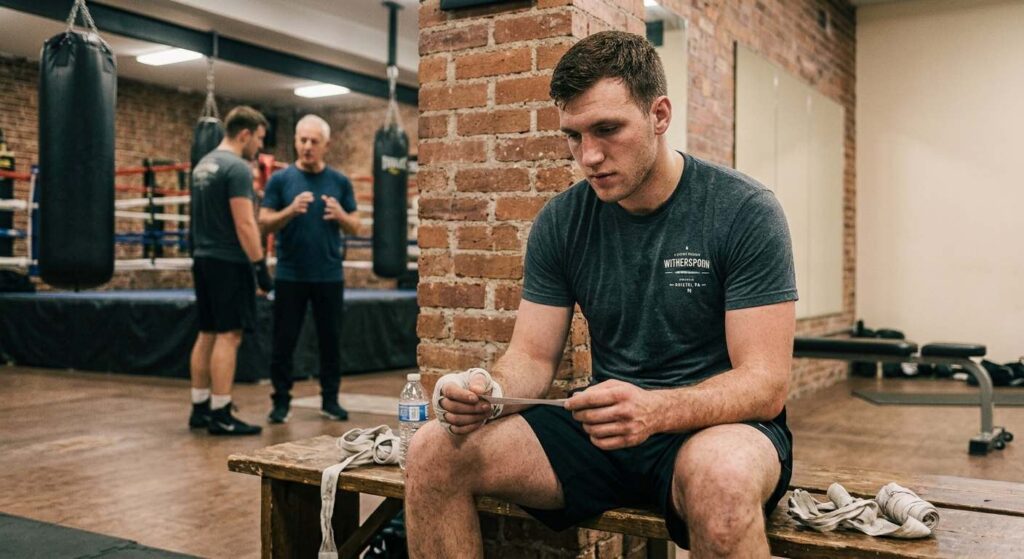
Why Recovery Is Where Athletic Development Actually Happens
The most important conceptual shift in understanding boxing recovery tips for athletes is recognizing that training sessions do not make athletes fitter, stronger, or more skilled — they create the stimulus that makes the body adapt in those directions during subsequent recovery. The actual physiological improvements — cardiovascular adaptation, muscle fiber repair and strengthening, neural pattern consolidation — all happen between sessions, not during them.
This means that a member of boxing classes in Bucks County at Witherspoon Boxing who trains three times per week and recovers excellently between sessions will develop faster and more sustainably than a member who trains five times per week but recovers poorly. Coaches at Witherspoon Boxing emphasize this principle with every member from their first session — because athletes who understand the physiological basis of recovery invest in it as seriously as they invest in training time. Check training and recovery scheduling on the schedule page.
Recovery Tip 1 — Sleep Is the Most Powerful Recovery Tool Available
Among all boxing recovery tips for athletes, sleep is the most impactful, most accessible, and most consistently underutilized. During sleep — particularly during slow-wave and REM sleep cycles — the body releases growth hormone that drives muscle protein synthesis, the immune system repairs micro-damage accumulated during training, and the nervous system consolidates the motor skill patterns developed during technical drilling sessions into long-term procedural memory.
Athletes who consistently sleep seven to nine hours per night recover measurably faster between boxing sessions, develop technical skills more rapidly, and sustain training quality across longer training blocks without the performance degradation that chronic sleep restriction produces.
The National Sleep Foundation confirms that athletes sleeping fewer than seven hours per night demonstrate significantly increased injury risk, reduced reaction time, impaired decision-making, and slower skill acquisition compared to adequately rested counterparts — making sleep quality the single most impactful boxing recovery tip for athletes at every experience level. Members of this boxing fitness center who implement consistent sleep discipline consistently report that it is the recovery change that produces the most noticeable improvement in their next-session training quality. Explore training at the gym through the gallery.

Recovery Tip 2 — Nutrition Timing Accelerates Muscle Repair
The post-training nutrition window is one of the most practically significant of all boxing recovery tips for athletes because the sixty-minute period immediately following a boxing session at Witherspoon Boxing & Fitness is when the body’s capacity for nutrient uptake and muscle protein synthesis is at its highest — making what you consume in this window disproportionately impactful on recovery speed and training adaptation quality.
A post-training meal or snack combining fast-digesting protein of twenty to forty grams — whey protein shake, Greek yogurt with fruit, eggs with rice — and moderate carbohydrates initiates muscle protein synthesis and glycogen replenishment simultaneously, setting the recovery process in motion within minutes of the session ending. Members of this boxing gym in Bristol PA who consistently apply post-training nutrition timing report noticeably reduced next-day soreness and improved readiness for subsequent sessions compared to those who delay post-training nutrition by two or more hours.
The Academy of Nutrition and Dietetics confirms that post-exercise protein consumption within sixty minutes of training produces superior muscle protein synthesis rates compared to equivalent protein consumed two to three hours post-exercise. Follow nutrition and recovery insights on the blog.
Recovery Tip 3 — Active Recovery Beats Complete Rest
One of the most counterintuitive but most consistently validated of all boxing recovery tips for athletes is that active recovery on rest days — light, low-intensity movement that maintains circulation without creating additional training stress — accelerates recovery from previous sessions more effectively than complete inactivity. The mechanism is straightforward: gentle movement drives blood flow to muscles recovering from previous training, accelerating the delivery of repair nutrients and the removal of metabolic waste products that cause delayed-onset muscle soreness.
For members of boxing and fitness programs at Witherspoon Boxing, active recovery on rest days takes the form of twenty to thirty minutes of walking, light swimming, or gentle yoga — maintaining movement quality and circulation without creating the muscular or cardiovascular stress of a training session. The yoga and Pilates programming available at this boxing fitness center in Bristol Borough is ideally suited for active recovery days — providing flexibility development, gentle core activation, and parasympathetic nervous system stimulation that complement rather than impede recovery from boxing training sessions. Stay current with recovery content through the news page.

Recovery Tip 4 — Hydration Begins Before and Continues After Every Session
Dehydration is among the most common and most easily prevented performance impairments in boxing training — and proper hydration is one of the most practically actionable of all boxing recovery tips for athletes precisely because it requires no special equipment, no additional time investment, and no complex dietary planning. Yet most members of boxing classes in Bucks County at Witherspoon Boxing arrive for sessions in a state of mild dehydration that impairs both training performance and subsequent recovery.
The hydration protocol that Tim Witherspoon Jr. and his coaching team recommend for members of this boxing gym in Bristol PA is simple and evidence-based. Begin the day with half a liter of water before any caffeine consumption. Maintain consistent water intake across the day targeting three to four liters total on training days. Consume five hundred milliliters in the two hours before training. Sip consistently during sessions rather than drinking large volumes infrequently. And replace fluid losses after training with electrolyte-containing beverages alongside water — particularly after sessions producing significant sweat output. Questions about recovery programming? Contact the team through the contact page.
Recovery Tip 5 — Manage Training Load and Listen to Your Body
The most sophisticated of all boxing recovery tips for athletes — and the one that separates athletes who train for decades productively from those who accumulate injuries and burn out within years — is the ability to manage training load intelligently in response to the body’s actual recovery state rather than following a fixed program regardless of how the body feels on any given day.
Coaches at Witherspoon Boxing & Fitness teach members to recognize the difference between the normal fatigue and muscle soreness that indicate productive training adaptation and the deeper exhaustion, persistent joint discomfort, and performance regression that indicate accumulated fatigue requiring a reduction in training load or an additional recovery day. Tim Witherspoon Jr.’s approach to training load management reflects his professional boxing experience — understanding that the most productive training week is not the hardest week but the one that creates the optimal stimulus for adaptation given each athlete’s current recovery state. This intelligence in training load management is one of the most valuable and most lasting coaching insights available through youth boxing classes and adult programs at this boxing fitness center.
Recover Better and Train Harder at Witherspoon Boxing Today
These boxing recovery tips for athletes are most powerfully applied alongside the expert training programming at Witherspoon Boxing & Fitness in Bristol Borough, PA — where Tim Witherspoon Jr. and his coaching team build recovery intelligence into every aspect of member development from the first session onward. Visit the schedule page and find your first class.
Click → Apply Now and start training and recovering like a real athlete at Witherspoon Boxing Bristol PA today.