By Tim Witherspoon Jr.
6 min read
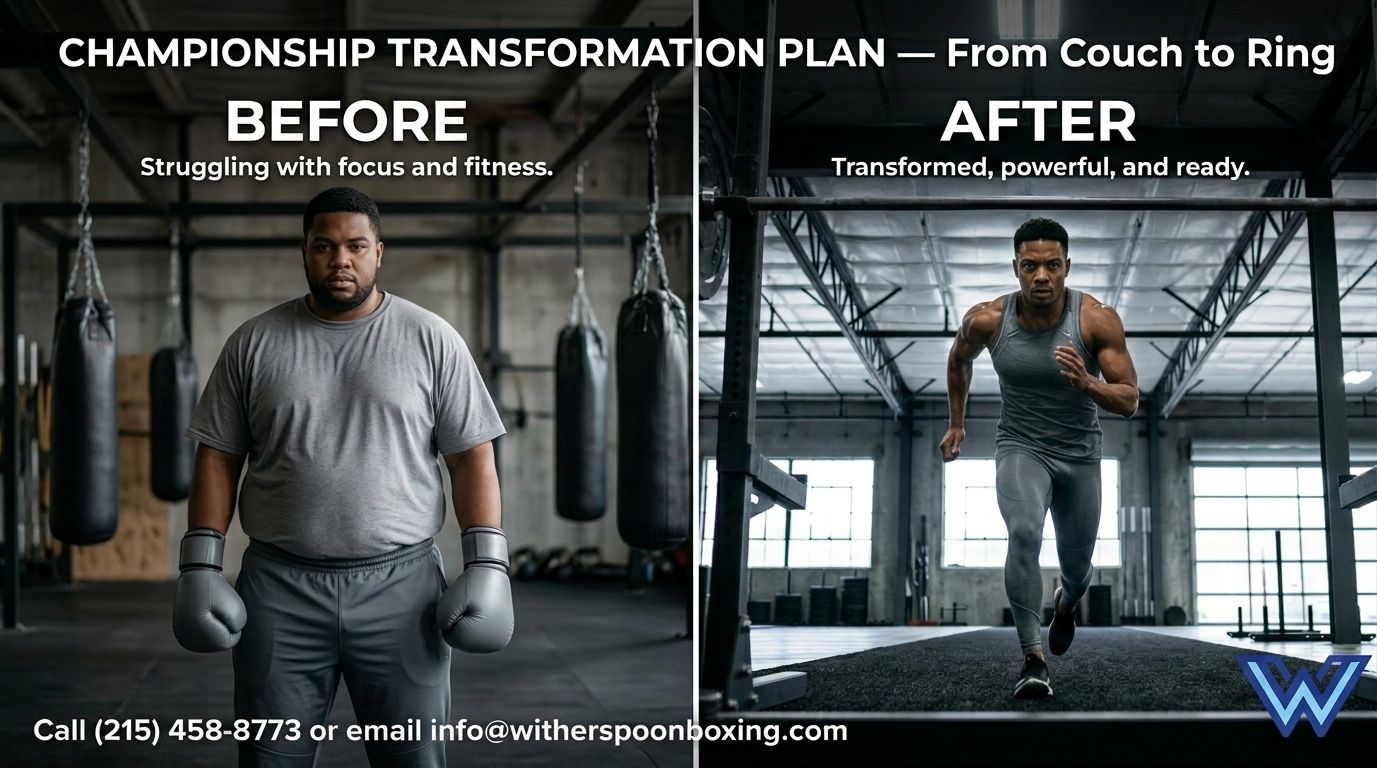
Honest boxing weight loss results look like this: better conditioning within four to six weeks, visible body composition change around eight to twelve weeks, and meaningful long-term results for people who are still training at month six. Anyone promising a specific number in a specific timeframe is guessing, because results depend on starting point, consistency, and nutrition far more than on the workout itself.
Our coaches at Witherspoon Boxing + Fitness — the boxing gym Bristol PA has trusted for two generations — would rather set honest expectations than impressive ones.
What Changes First (And It Is Not the Scale)
Most people start by watching their weight. The changes that actually arrive first are different, and they matter more for staying motivated.
| Timeframe | What You Notice |
|---|
| Weeks 1–2 | Sore shoulders and legs. Everything feels hard |
| Weeks 3–4 | Soreness eases. Rounds stop feeling impossible |
| Weeks 4–6 | Noticeably better conditioning. Stairs stop being an event |
| Weeks 6–8 | Better sleep and energy commonly reported. Clothes start fitting differently |
| Weeks 8–12 | Visible definition, particularly shoulders and midsection |
| Months 3–6 | Clear body composition change with consistent training |
Notice that conditioning improves weeks before appearance does. People who only track the scale often quit in week five, right before the visible changes start.
Why the Scale Can Mislead
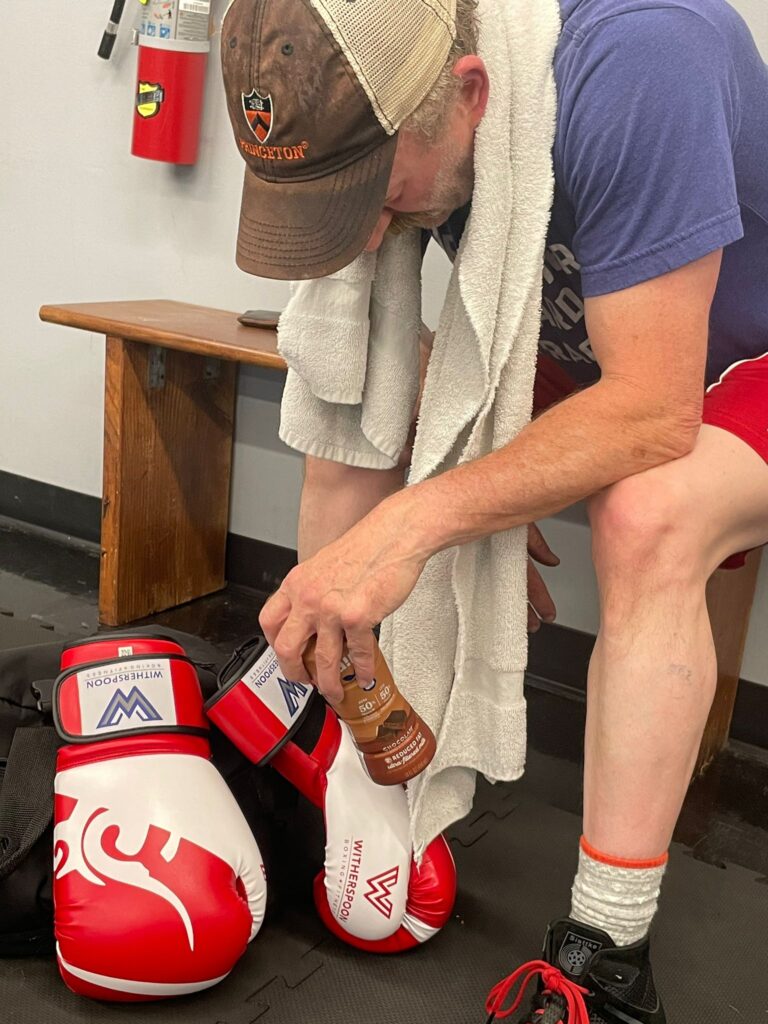
Boxing builds lean muscle while reducing fat, which means body composition can change meaningfully while the number on the scale moves slowly. That is a good outcome being measured by the wrong tool.
Better things to track:
- How you feel in round three compared to a month ago
- How clothes fit, particularly around the waist
- Resting heart rate over time
- Sessions attended per month — the number that actually predicts results
- Technique, which improves regardless of anything else
Our guide on does boxing build muscle covers why definition arrives before scale change.
What Determines Your Results
| Factor | Impact |
|---|
| Consistency | The largest factor by a wide margin |
| Nutrition | Plays a bigger role than exercise calorie burn |
| Starting point | People with more to lose often see faster early change |
| Sleep | Affects recovery, appetite, and energy |
| Training frequency | Two to three sessions weekly is the realistic baseline |
| Stress and life circumstances | Genuinely affect outcomes |
Two or three sessions weekly meets the CDC’s physical activity guidance of 150 minutes of moderate activity plus muscle-strengthening work on two or more days. That is the whole recommendation, met by turning up.
For anything personalised — nutrition, targets, or managing a health condition — speak to a registered dietitian or your doctor. This page is general information, not medical or nutrition advice.
Why Boxing Works Where Other Things Stopped
The most common story we hear is not “I needed a harder workout.” It is “I kept quitting.”
- There is a skill to chase. Technique improves every week, independent of body change.
- You are coached. Someone notices your form and your absence.
- One hour covers both. Cardio and strength in the same session.
- It is absorbing. An hour where you think about combinations, not effort.
- Community keeps you there. Accountability beats motivation long term.
The American College of Sports Medicine emphasises adherence as the strongest predictor of results from any program. A workout you abandon in six weeks delivers nothing, however effective it is on paper.
A Realistic First Three Months
| Month | Sessions/Week | Focus |
|---|
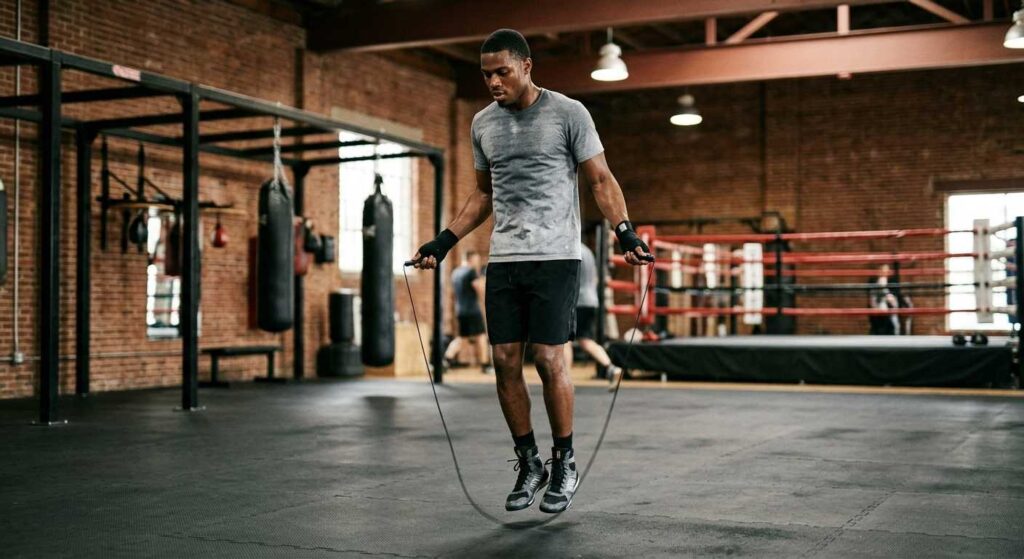
| 1 | 2 | Learning technique, letting your body adapt |
| 2 | 2–3 | Building conditioning, combinations flowing |
| 3 | 3 | Real fitness gains, visible changes beginning |
Starting at five sessions a week is how people end up injured or burnt out by week three. Our guide on how many times a week you should box covers sensible progression.
What We Will Not Tell You
We are not going to promise a number of pounds, a timeframe, or a transformation. Nobody honest can, because results vary enormously between individuals with identical training.
What we can say is that people who train two or three times a week for six months look and feel substantially different from when they started. How that shows up on a scale is less predictable than the fitness, the strength, and the confidence.
If weight or body image is something you find difficult to think about, that is worth discussing with your doctor. Training should improve how you feel, not become another source of pressure.
Classes That Build Results
The boxing classes Bucks County members rely on run seven days a week:
- Cardio Boxing — Mon/Wed/Fri 6:00 AM, Tue/Thu 9:00 AM & 5:00 PM
- Beginner Boxing — Mon/Wed 9:00 AM & 5:00 PM, Fri 9:00 AM, Sat 9:00 AM
- Strength & Strike — Tue/Thu 6:00 AM
- Bootcamp — Tue/Thu 6:00 PM, Fri 10:00 AM
- Adult Boxing — Tue/Thu 12:00 PM
- Advanced Boxing — Mon/Wed 6:00 PM, Sat 9:00 AM
- Women’s Boxing — Tue/Thu 7:00 PM, Sat 11:00 AM
- Kids Boxing (Ages 6–12) — Mon/Wed 7:00 PM, Tue/Thu 6:00 PM
- Sparring Lab — Mon/Wed 7:00 PM, Sat 10:00 AM
- Recovery & Mobility — Sun 9:00 AM
- Open Gym & Personal Training — daily
Our youth boxing classes are entirely non-contact, and our boxing training for beginners program assumes no experience. See the full weekly schedule.
Our staff is led by Tim Witherspoon Jr., and the Witherspoon family has competed at the professional level since the 1970s. Read more on our about us page or see the gym in our gallery. Anyone searching learn boxing near me in lower Bucks County will find a genuine boxing fitness center here, where boxing and fitness are built on what people can actually sustain.

Frequently Asked Questions
How long before I see results from boxing?
Conditioning improves within four to six weeks. Visible body composition change typically appears around eight to twelve weeks with consistent training.
How much weight will I lose?
That varies enormously between individuals and depends more on consistency and nutrition than on the workout. Nobody can honestly predict a number.
Why has the scale not moved?
Boxing builds lean muscle while reducing fat, so composition can change while weight moves slowly. Clothes fitting differently is often a better signal.
How many sessions a week do I need?
Two to three is the realistic baseline. More is not automatically better.
Is boxing better than running for this?
Calorie burn is broadly comparable. Boxing adds full-body engagement and most people find it easier to sustain.
Do I need to change my diet?
Nutrition plays a significant role. For personalised guidance, speak to a registered dietitian or your doctor.
What should I track instead of weight?
Sessions attended, how you feel in round three, how clothes fit, and your technique.
Is the first class free?
Yes. Gloves included, no membership required, no obligation to continue.
The Number That Predicts Results
Not calories burned. Sessions attended. Come try one free class and start counting from there.
Booking Is This Simple
| Step | What You Do |
|---|
| 1 | Click the red Apply Now button below |
| 2 | Fill in your name, email, and the class you like |
| 3 | We call you back and confirm your free first class |
That is it. Gloves provided. No experience needed. Just show up.
👊 APPLY NOW — BOOK YOUR FREE CLASS
Prefer to talk first? Call (215) 458-8773 or email info@witherspoonboxing.com.
You can also message us on our contact page, read our story on about us, check gym updates in news, or browse more guides on the blog.
Witherspoon Boxing + Fitness — 925 Canal Street, Door 19, Bristol, PA 19007 — Bringing Out Everyone’s Inner Champion.
 Free every week