By Tim Witherspoon Jr.
5 min read
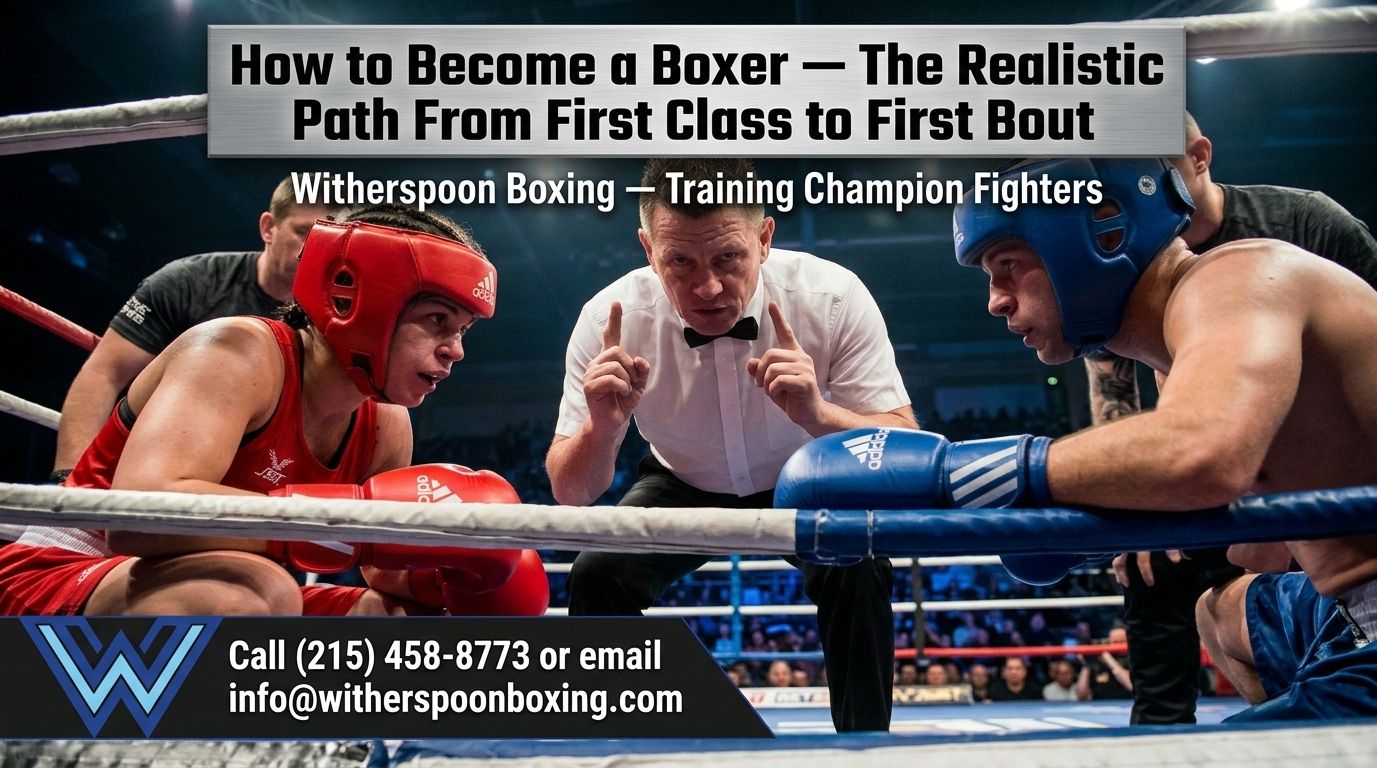
How to become a boxer: join a real boxing gym, train two to three times a week under a coach, spend six months building stance, guard, and fundamentals, add supervised sparring once a coach says you are ready, then register with the governing body and pass a medical before competing. From first class to first amateur bout typically takes two to three years.
Our coaches at Witherspoon Boxing + Fitness — the boxing gym Bristol PA has trusted for two generations — have walked members through every stage of that. Here is the honest version.
The Path at a Glance
| Stage | Timeframe | Focus |
|---|
| Find a gym | Week 1 | Somewhere with a ring and real coaches |
| Fundamentals | Months 1–6 | Stance, guard, jab, footwork, defense |
| Building skills | Months 6–12 | Combinations, counters, conditioning |
| Supervised sparring | From 3–6 months | Timing and composure under pressure |
| Serious training | Year 1–2 | Technique holding up under fatigue |
| Registration and medical | Before competing | Governing body requirements |
| First amateur bout | Year 2–3 | Camp, taper, compete |
Step 1 — Choose a Real Boxing Gym
—How to Become a Boxer—
This decision matters more than anything else on the list. A fitness studio with bags in a corner cannot make you a boxer.
What to look for:
- A competition ring, not just floor space
- Coaches with boxing background, not weekend certifications
- Pad work in every class, so technique is corrected constantly
- A structured beginner pathway
- Supervised sparring for those who progress to it
- Members who have actually competed
Step 2 — Learn the Fundamentals Properly
The first six months are unglamorous and completely decisive. Stance, guard, the jab, footwork, and defense.
People who rush this plateau at around month eight and never recover. People who drill the jab for six months are still improving three years later. Our guides on boxing stance and guard and boxing combinations for beginners cover what gets built here.
Step 3 — Train Consistently
Two to three sessions a week is the baseline. Serious amateurs train four to six, but nobody starts there.
| Stage | Sessions/Week |
|---|
| Months 1–3 | 2 |
| Months 3–12 | 3 |
| Year 1–2 | 3–4 plus strength work |
| Competing | 4–6 with structured recovery |
Our guide on how many times a week you should box covers frequency and recovery.
Step 4 — Add Conditioning and Strength
Punching power comes from the ground up. Legs, core, and back carry it, which is why strength work matters as you progress — our Strength & Strike class on Tuesday and Thursday at 6:00 AM is built for exactly that.
Step 5 — Start Sparring, When Ready
Typically three to six months in, and only when a coach says so. Sparring is where timing, distance, and composure actually develop.
It is also entirely optional. Plenty of members train for years without it, and that is a legitimate path. Our guide on Sparring Lab for beginners explains how we run it.
Step 6 — Register and Get Medical Clearance
Competing requires membership with USA Boxing, an annual physical from a qualified physician, a competition record, and a coach willing to corner you.
Speak to your doctor about whether competition is appropriate for your individual health situation, particularly if you have any history of head injury. Our guide on amateur boxing rules explained covers the requirements.
Step 7 — Your First Bout
A twelve-week camp structured as base building, sharpening, peak, and taper. Our guide on how to prepare for your first amateur fight covers it in full.
What Nobody Tells You
- Progress is not linear. You will have months where nothing improves.
- Fitness arrives long before skill. You will feel fit well before you look like a boxer.
- The jab is the whole sport. Everyone wants to skip it. Nobody successfully does.
- Getting hit is less dramatic than you expect and more tiring.
- Most people never compete, and that takes nothing away from them.
- Consistency beats talent over any timeframe that matters.
Do You Have to Compete?
No. The overwhelming majority of our members train for fitness, skill, and stress relief with no interest in a bout. Two or three sessions a week also meets the CDC’s physical activity guidance on its own.
Being a boxer is about how you train, not whether you have a record.
Starting in Bucks County
The boxing classes Bucks County members rely on support the whole pathway:
- Beginner Boxing — Mon/Wed 9:00 AM & 5:00 PM, Fri 9:00 AM, Sat 9:00 AM
- Advanced Boxing — Mon/Wed 6:00 PM, Sat 9:00 AM
- Adult Boxing — Tue/Thu 12:00 PM
- Women’s Boxing — Tue/Thu 7:00 PM, Sat 11:00 AM
- Strength & Strike — Tue/Thu 6:00 AM
- Cardio Boxing — Mon/Wed/Fri 6:00 AM, Tue/Thu 9:00 AM & 5:00 PM
- Sparring Lab — Mon/Wed 7:00 PM, Sat 10:00 AM
- Kids Boxing (Ages 6–12) — Mon/Wed 7:00 PM, Tue/Thu 6:00 PM
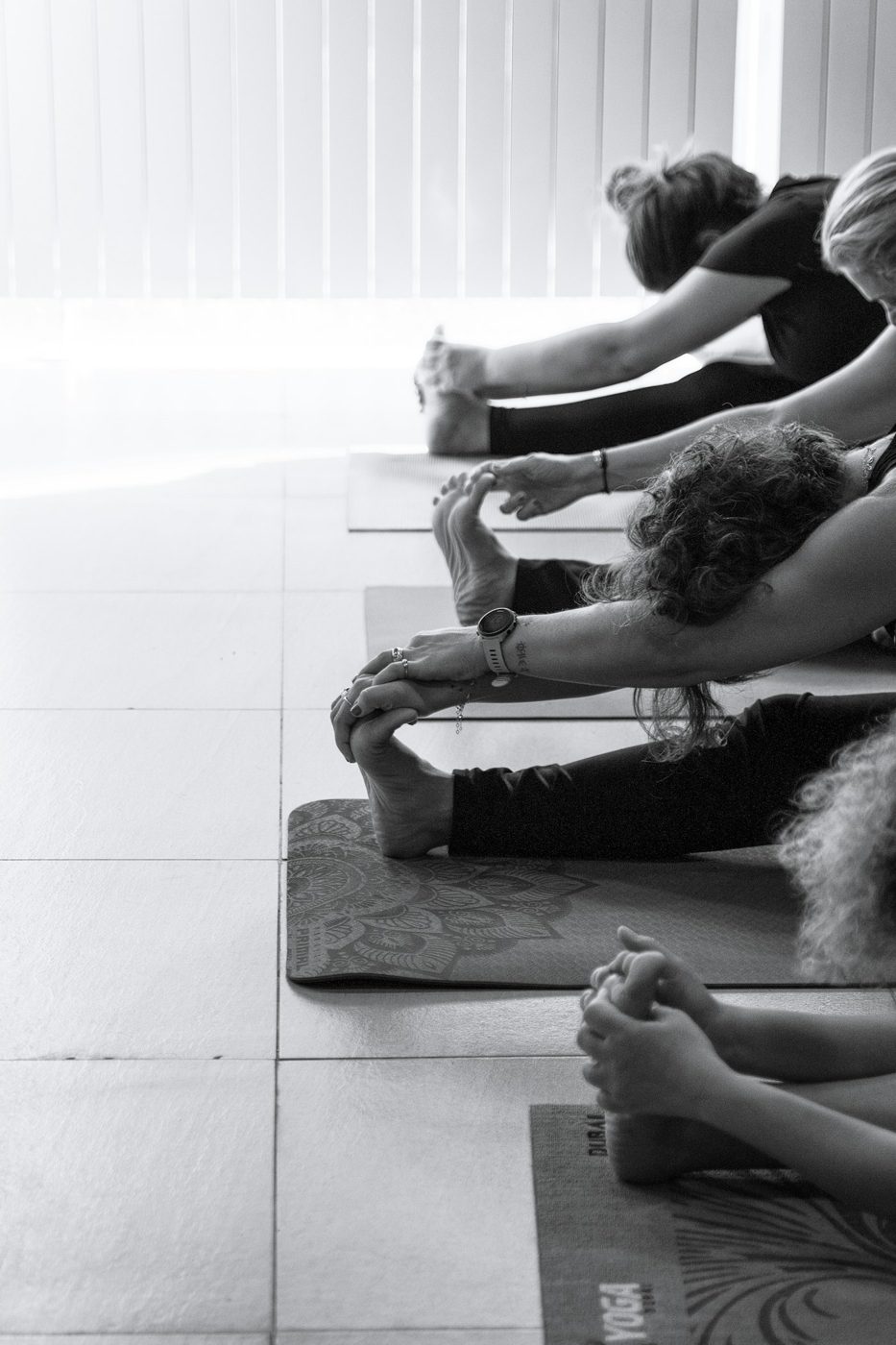
- Recovery & Mobility — Sun 9:00 AM
- Open Gym & Personal Training — daily
Our youth boxing classes are entirely non-contact, and our boxing training for beginners program assumes zero experience. See the full weekly schedule.
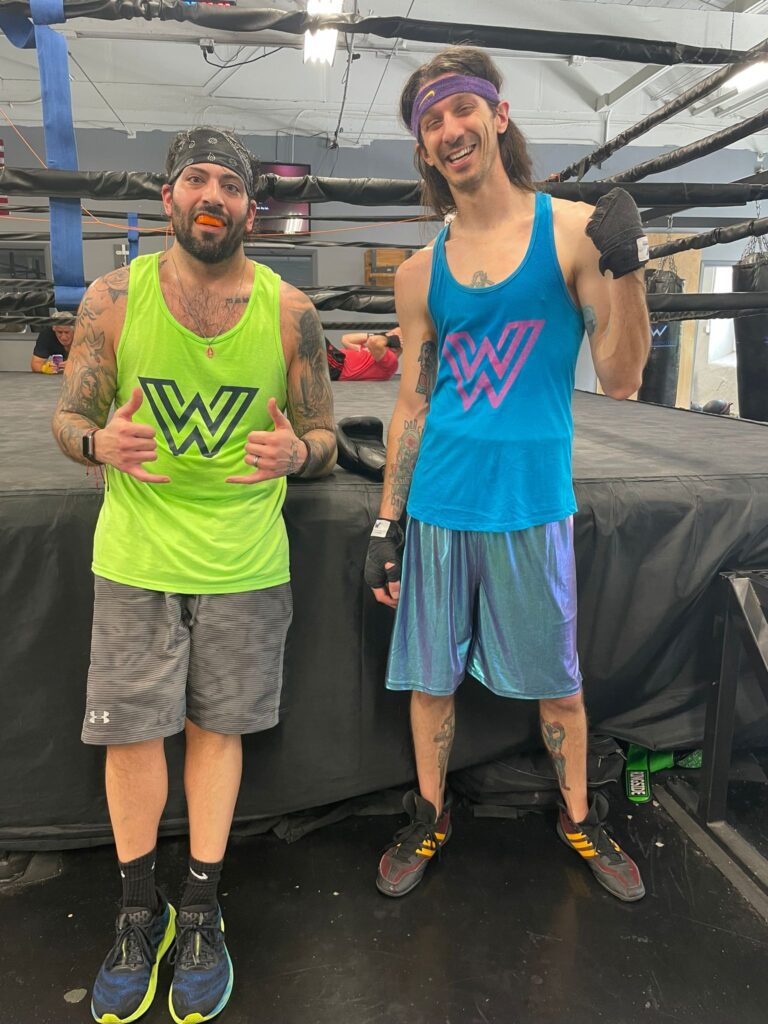
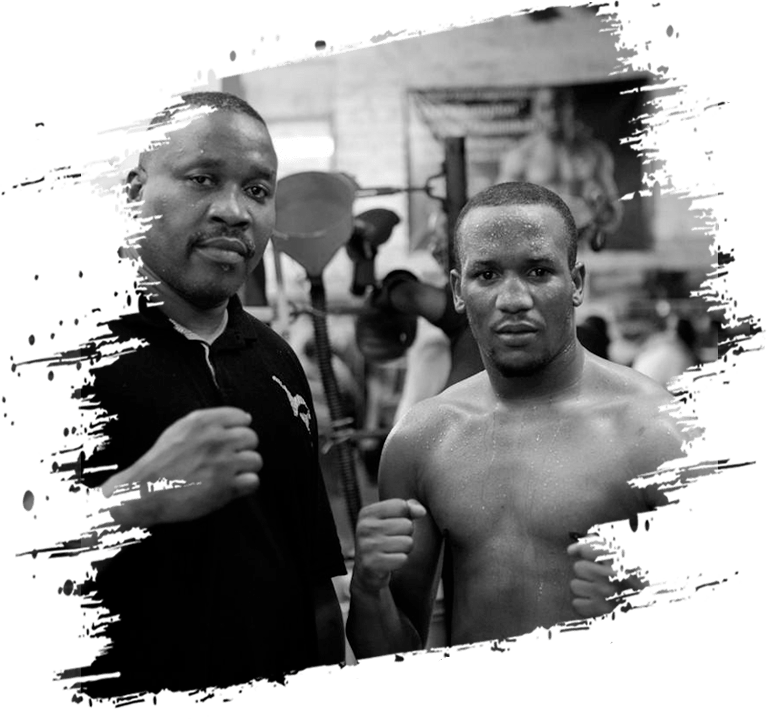
Our staff is led by Tim Witherspoon Jr., and the Witherspoon family has competed at the professional level since the 1970s. Read more on our about us page or see the gym in our gallery. Anyone searching learn boxing near me in lower Bucks County will find a genuine boxing fitness center here, where boxing and fitness are built from fundamentals upward.
Frequently Asked Questions
How long does it take to become a boxer?
Basic competence in three to six months, solid amateur level in one to two years, and competition readiness typically in two to three.
Can I start boxing at 30 or 40?
Yes. Many members start in their thirties, forties, and fifties.
Do I need to be fit first?
No. Fitness comes from training, not before it.
How much does it cost to start?
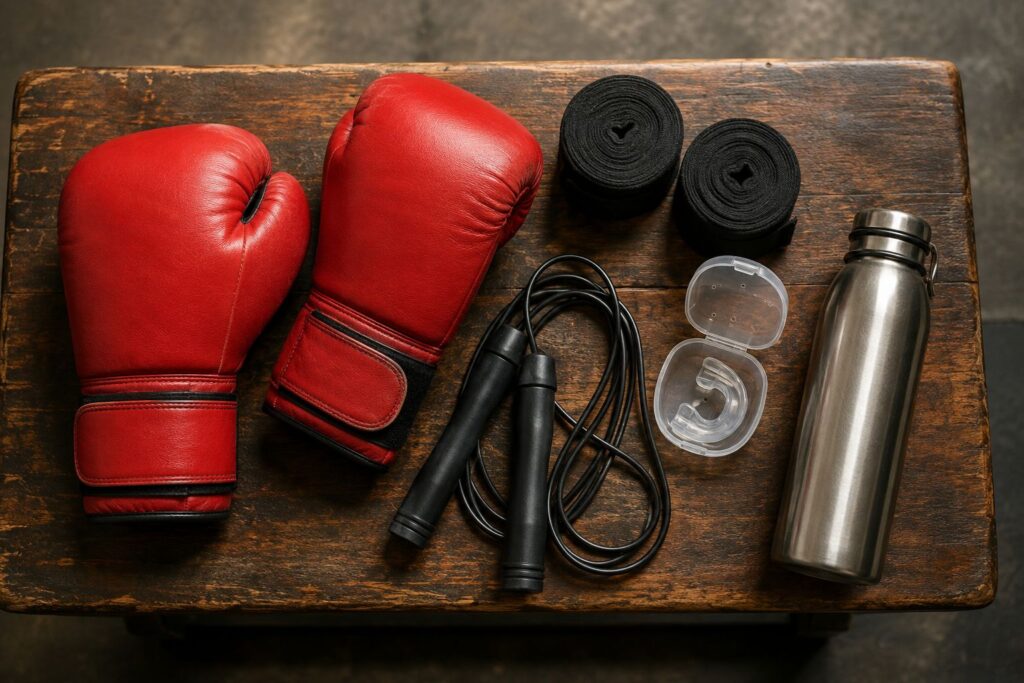
Around $80 to $130 covers wraps, gloves, and a jump rope. Gloves are provided for your first sessions.
Do I have to spar?
Only if you choose to. It is optional and always supervised.
How do I register to compete?
Through USA Boxing, with membership, an annual physical, and a registered coach.
Can I learn boxing at home?
You can build fitness, but technique needs correction. Faults you cannot see become habits.
Is the first class free?
Yes. Gloves included, no membership required.
Step One Is This Week
Every timeline above starts from your first session. Come try one free class and begin.
Booking Is This Simple
| Step | What You Do |
|---|
| 1 | Click the red Apply Now button below |
| 2 | Fill in your name, email, and the class you like |
| 3 | We call you back and confirm your free first class |
That is it. Gloves provided. No experience needed. Just show up.
👊 APPLY NOW — BOOK YOUR FREE CLASS
Prefer to talk first? Call (215) 458-8773 or email info@witherspoonboxing.com.
You can also message us on our contact page, read our story on about us, check gym updates in news, or browse more guides on the blog.
Witherspoon Boxing + Fitness — 925 Canal Street, Door 19, Bristol, PA 19007 — Bringing Out Everyone’s Inner Champion.

 Free every week