
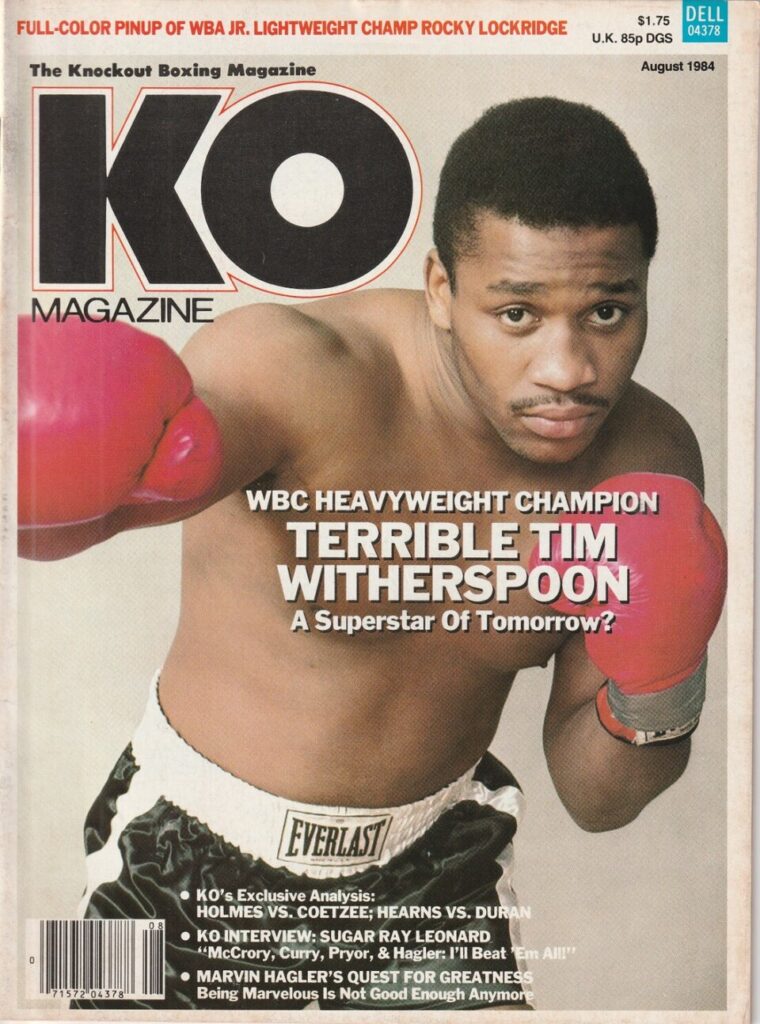
Boxing Training for Weight Management-Hand speed is one of the most coveted attributes in boxing — and one of the most misunderstood. Most beginners assume that how to improve hand speed in boxing is primarily a question of natural ability or physical fast-twitch fiber endowment — that fast hands are something you are born with rather than something you develop through deliberate training. At Witherspoon Boxing & Fitness in Bristol Borough, PA, coaches led by former professional boxer Tim Witherspoon Jr.
correct this misconception from the earliest sessions of boxing training for beginners — because hand speed is a trainable quality, and understanding exactly how to improve hand speed in boxing through specific techniques, drills, and programming produces measurable velocity improvements in members at every experience level.
Learn about the coaching expertise behind these principles on the about us page. Research from the National Strength and Conditioning Association confirms that punch velocity in boxing athletes responds significantly to specific speed-focused training interventions — with fast-twitch fiber recruitment, neuromuscular coordination, and relaxation-tension timing identified as the primary trainable determinants of hand speed improvement across all experience levels.

The Real Source of Hand Speed — Relaxation, Not Tension
The most important and most counterintuitive insight in understanding how to improve hand speed in boxing is that punching speed is primarily a function of muscular relaxation rather than muscular force production. The fastest punches in boxing history were not thrown by the largest or strongest athletes — they were thrown by athletes who had developed the capacity to keep their muscles completely relaxed through the delivery phase of each punch and tense them explosively only at the precise moment of impact.
Muscular tension during the delivery of a punch creates internal resistance that slows the movement — the same muscles that should be contributing to velocity are simultaneously impeding it when they contract prematurely. Coaches at Witherspoon Boxing teach relaxation as the first and most important hand speed development principle — using mirror work, slow-motion drilling, and specific relaxation cue prompts to develop the capacity to keep the punching arm loose and fast through the delivery and snap to tension only at impact. Members of boxing classes in Bucks County who implement this relaxation principle consistently report immediate improvements in punch speed that no physical training change alone produces comparably quickly.
Check how speed training is built into sessions on the schedule page.
Drill 1 — Speed Bag Training for Neural Timing
The speed bag is the most boxing-specific tool for developing the neural timing and rhythmic hand speed that distinguishes fluid, fast combination workers from stiff, mechanical punchers. Regular speed bag training at this boxing fitness center in Bristol Borough develops the specific neuromuscular timing — the ability to coordinate punch return with the bag’s rebound timing — that transfers directly into combination speed and rhythm on the heavy bag and in actual boxing contexts.
Speed bag training for how to improve hand speed in boxing at Witherspoon Boxing begins with learning the basic single-hit rhythm — striking the bag with the lead hand, allowing it to rebound twice, and striking again in a continuous rhythm. As this rhythm becomes automatic, coaches introduce alternating hand patterns, then double-hit variations, then complex rhythmic patterns that challenge neural coordination at increasing complexity levels. The neuromuscular adaptation produced by consistent speed bag training — improved timing precision, faster motor program execution, and more fluid punch-to-punch transitions — transfers across every boxing activity that hand speed determines. Explore training in action through the gallery.
Drill 2 — Double-End Bag for Reactive Speed
If the speed bag develops rhythmic hand speed, the double-end bag develops reactive hand speed — the ability to throw punches and immediately react to the bag’s unpredictable rebound with follow-up combinations at maximum velocity. The double-end bag’s elastic cord attachment causes it to return along an irregular, partially unpredictable path after each punch — requiring the practitioner to track its movement, time their follow-up punch, and execute it with maximum speed despite the reactive demand.
This reactive element is precisely what makes double-end bag training so effective for understanding how to improve hand speed in boxing in a way that transfers to actual boxing performance — because boxing speed is not purely rhythmic, it is reactive. The ability to throw combinations fast in isolation is meaningless if the hands are slow when reacting to an opponent’s movement or return position. Coaches at this boxing gym in Bristol PA use double-end bag work as a primary speed development tool for intermediate and advanced members — introducing it after speed bag fundamentals are established and building session time on it progressively as reactive timing improves. Follow speed development content on the blog.
Drill 3 — Light Glove and Resistance Band Speed Drills
One of the most practically effective answers to how to improve hand speed in boxing is the contrast training principle — alternating between punching with resistance added and punching with that resistance removed. When the nervous system adapts to overcoming resistance and the resistance is suddenly removed, it produces temporarily elevated movement velocity — the PAP (post-activation potentiation) effect that creates a training window of enhanced speed expression.
At Witherspoon Boxing & Fitness, coaches implement resistance contrast training for hand speed development using resistance bands anchored behind the member at shoulder height — the member throws jabs and crosses against the band’s resistance for ten repetitions, then immediately removes the band and throws the same punches with maximum speed for ten repetitions. The contrast between resisted and unresisted punching trains the nervous system to recruit fast-twitch motor units more explosively — producing hand speed improvements that accumulate over weeks of consistent application.
Tim Witherspoon Jr.’s coaching staff designs these contrast protocols individually for members at appropriate experience levels — ensuring that resistance levels challenge without compromising technique mechanics. The American Council on Exercise identifies contrast training as one of the most effective speed development protocols available to athletic populations across multiple sports. Stay connected through the news page.
Drill 4 — Shadowboxing With Maximum Speed Emphasis
Dedicated speed shadowboxing rounds — where the explicit objective is maximum hand velocity rather than combination complexity or defensive integration — provide the most volume-efficient training environment for improving hand speed because they allow maximum repetitions of fast punching without the impact resistance of the bag or the reactive demand of equipment-based training. In speed shadowboxing at this boxing and fitness center, members throw single punches and two-punch combinations at absolute maximum velocity for thirty-second bursts followed by thirty seconds of slow, deliberate technical shadowboxing — alternating between maximum speed output and quality-focused movement throughout the round.
This speed-focus interval structure develops the neuromuscular firing patterns of maximum velocity punching while the alternating slow periods reinforce the technical mechanics that fast punching must maintain to be effective rather than simply uncontrolled. Members of Witherspoon Boxing who incorporate two dedicated speed shadowboxing rounds into each weekly training session alongside their regular programming consistently demonstrate measurable hand speed improvements over six to eight week training blocks — improvements that coaches at this boxing gym in Bristol PA track through timed combination counts and qualitative assessment of punch crispness and return speed. Questions about hand speed programming? Contact the team through the contact page.
The Role of Technical Refinement in Hand Speed Development
The final and most fundamentally important element of how to improve hand speed in boxing at Witherspoon Boxing is technical refinement — because mechanical inefficiency in punching technique wastes movement and time in ways that limit hand speed regardless of physical speed development. A punch that travels in an arc rather than a straight line, that drops below guard position before initiating, or that does not return to guard along the most direct path loses velocity at every inefficient deviation from optimal mechanics.
Coaches at Witherspoon Boxing & Fitness treat technical refinement as the highest-priority hand speed development intervention for most members — because eliminating mechanical waste from punching patterns produces speed improvements faster than any physical training change for members whose mechanics still contain significant inefficiency. The combination of technical refinement, relaxation training, speed bag work, double-end bag training, and contrast speed drills built into boxing training for beginners through advanced programming at Witherspoon Boxing creates a comprehensive hand speed development system that produces measurable, consistent velocity improvements for every member committed to implementing it. Youth boxing classes at the gym develop hand speed from early development stages — building the neural timing and technical precision that hand speed ultimately depends on.
Develop Faster Hands at Witherspoon Boxing Today
Understanding how to improve hand speed in boxing and applying that knowledge under expert coaching at Witherspoon Boxing & Fitness in Bristol Borough, PA produces hand speed improvements that self-directed training programs rarely achieve with equivalent consistency or speed. Led by Tim Witherspoon Jr., this boxing gym in Bristol PA gives every member of boxing classes in Bucks County the tools, techniques, and coaching expertise to develop the fastest hands their neuromuscular potential allows. Visit the schedule page.
Click → Apply Now and start developing faster hands under expert coaching at Witherspoon Boxing Bristol PA today.