
Ask any coach which punch separates a beginner from a real boxer, and most will say the same thing: the hook. Learning how to throw a hook in boxing takes more than swinging your arm sideways. It takes rotation, balance, and timing that comes only from proper coaching. At Witherspoon Boxing + Fitness — the boxing gym Bristol PA fighters have trusted for two generations — we teach the hook the same way it has been taught in the Witherspoon family since the 1970s. This guide breaks down every detail so you can start throwing hooks that actually land.
Whether you are brand new and searching for boxing training for beginners, or you already train and want sharper technique, the mechanics below will change how your hook feels the very first session.
What Makes the Hook Different From Every Other Punch
The jab and the cross travel in straight lines. The hook does not. It travels on a horizontal arc, which means it slips around a guard instead of through it. That single difference makes it the most feared punch in amateur and professional boxing alike.
However, the hook is also the punch beginners get wrong most often. Why? Because power does not come from the arm. It comes from the ground, through the hips, and out through a locked frame. Once you understand that chain, everything clicks.
Where the Power Actually Comes From
- The floor — your lead foot pivots and drives the rotation.
- The hips — they turn first, before the shoulder moves.
- The core — it transfers hip rotation into the upper body.
- The shoulder and arm — these only deliver what the lower body already created.
Beginners reverse that order. They lead with the arm and wonder why the punch feels weak. Our coaches fix this in the first week of Beginner Boxing classes.
How to Throw a Hook in Boxing — Step by Step
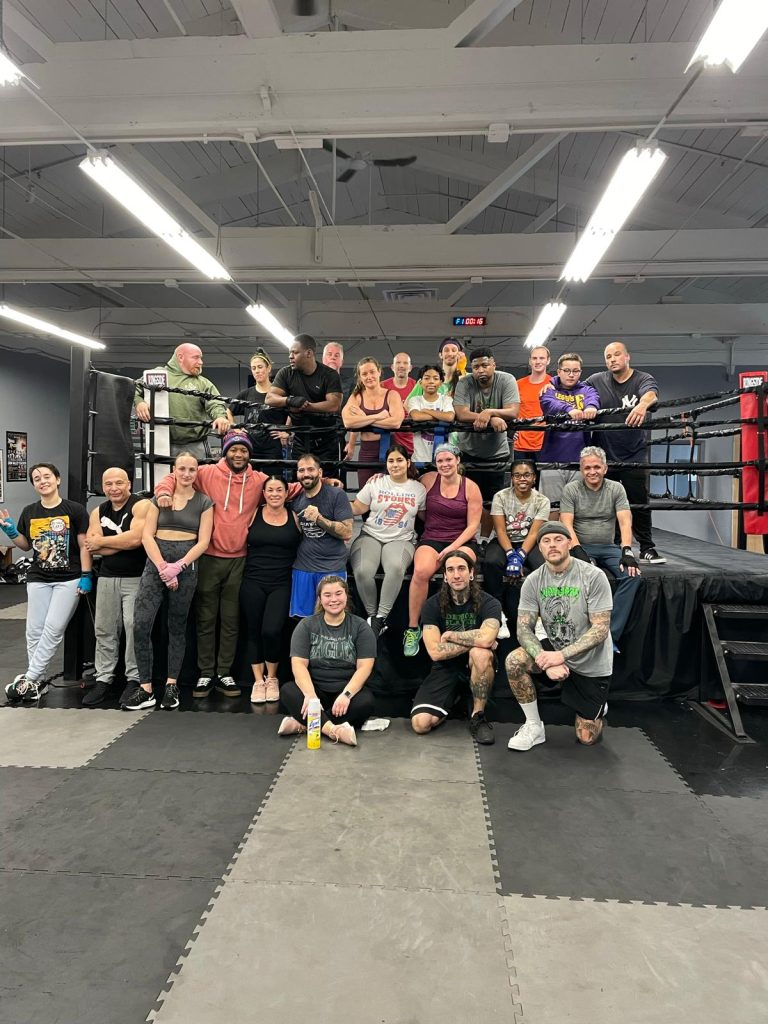
Here is the exact sequence we coach on the floor at 925 Canal Street. Practice it slowly at first. Speed comes later.
Step 1 — Set Your Stance
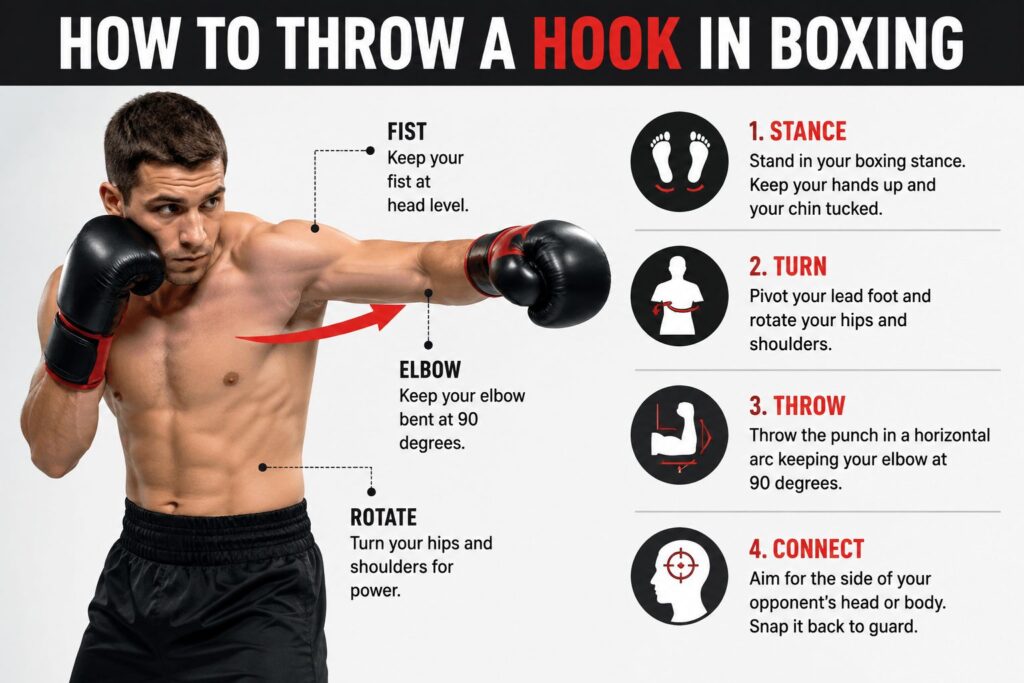
Feet shoulder-width apart, lead foot forward, weight balanced. Knees soft, never locked. If your stance is wrong, the hook is wrong before it starts. Your chin stays tucked and your rear hand stays glued to your cheek.
Step 2 — Load the Lead Side
Shift a small amount of weight onto your lead leg. This is a subtle move, not a lean. Overloading telegraphs the punch and leaves you off balance.
Step 3 — Pivot the Lead Foot
Turn your lead heel outward as if you are crushing a bug under the ball of your foot. This pivot is the engine of the punch. No pivot means no power — it is that simple.
Step 4 — Rotate Hips and Torso Together
Your hips and core turn as one unit. The rotation should feel like you are turning to look behind you. Meanwhile, your rear hand stays high to protect your chin.
Step 5 — Bring the Arm Through at 90 Degrees
Your elbow stays bent at roughly ninety degrees and your forearm stays parallel to the floor. The arm does not extend. Instead, it holds its shape while your body swings it through the target.
Step 6 — Land With a Flat Fist and Retract Immediately
Contact is made with the front two knuckles. Keep the wrist straight and locked. Then snap the hand straight back to your guard along the same path. A hook you leave hanging is an invitation to get countered.
Lead Hook vs Rear Hook — Know the Difference
Most fighters throw the lead hook far more often. Still, both belong in your toolbox.
| Feature | Lead Hook | Rear Hook |
|---|---|---|
| Speed | Faster — shorter distance | Slower — travels farther |
| Power | High | Very high |
| Risk | Moderate | High — opens your guard |
| Best used | After a jab, or on the counter | Inside range, after body work |
| Beginner priority | Learn this first | Add later |
In our Advanced Boxing sessions, we drill both — but only after the lead hook is clean.
Head Hook or Body Hook? Both, and Here Is When
The hook to the head ends fights. The hook to the body wins rounds. A liver shot — a left hook landing just under the ribs on the right side — drops opponents who never saw it coming. Body hooks also drain stamina, which makes the head shot available in later rounds.
The mechanics stay identical. You simply bend at the knees to change level rather than dropping your hands. Level change with your legs, never with your guard.
5 Hook Mistakes We Correct Every Week
- No foot pivot. The punch becomes an arm swing with zero weight behind it.
- Dropping the opposite hand. Your chin is exposed the entire time the hook travels.
- Bent wrist on impact. This is the fastest route to a hand injury — and why wrapping your hands correctly matters so much.
- Winding up. A big loading motion tells your opponent exactly what is coming.
- Losing balance forward. If you stumble after the punch, your weight transfer is wrong, not your arm.
These errors are almost impossible to spot on your own. That is exactly why mirror work and pad rounds with a coach beat any video tutorial. It is also why so many people searching learn boxing near me end up staying at a real boxing fitness center instead of training alone at home.
Drills That Build a Real Hook
Shadow Boxing With a Focus on Pivot
Three rounds, hooks only, watching your lead heel in the mirror. Slow and deliberate beats fast and sloppy every time.
Heavy Bag Rotation Rounds
Jab–jab–lead hook, then reset. Listen for the sound. A proper hook makes a flat thud, not a slap.
Double End Bag for Timing
The moving target forces you to hook at the right moment rather than on autopilot.
Focus Mitts With a Coach
Nothing replaces this. Our coaches call combinations live and correct your angle mid-round. Mitt work is built into our Beginner, Advanced, and Adult classes — see the full weekly schedule.
Where to Train Your Hook in Bucks County
Witherspoon Boxing + Fitness sits at 925 Canal Street, Door 19, in Bristol, PA 19007. We are a community-first boxing fitness center founded on real championship experience. Tim Witherspoon Jr. leads a coaching staff that has developed competitive amateurs, first-time adults, and kids who had never thrown a punch before walking through our door.
Our boxing classes Bucks County members rely on run seven days a week:
- Beginner Boxing — Mon/Wed 9:00 AM & 5:00 PM, Fri 9:00 AM, Sat 9:00 AM
- Advanced Boxing — Mon/Wed 6:00 PM, Sat 9:00 AM
- Adult Boxing — Tue/Thu 12:00 PM
- Women’s Boxing — Tue/Thu 7:00 PM, Sat 11:00 AM
- Kids Boxing (Ages 6–12) — Mon/Wed 7:00 PM, Tue/Thu 6:00 PM
- Sparring Lab — Mon/Wed 7:00 PM, Sat 10:00 AM
- Cardio Boxing — Mon/Wed/Fri 6:00 AM, Tue/Thu 9:00 AM & 5:00 PM
Our youth boxing classes teach the same fundamentals with age-appropriate, non-contact drilling. Parents consistently tell us their kids gain focus and confidence within weeks. Take a look at our gallery to see the room, the ring, and the community you would be joining.
Frequently Asked Questions
How long does it take to learn how to throw a hook in boxing?
Most members throw a technically correct hook within two to three weeks of consistent classes. Making it automatic under pressure takes a few months of pad and sparring work.
Why does my hook feel weak?
Nine times out of ten, the lead foot is not pivoting. Fix the pivot and the power arrives immediately.
Should beginners throw hooks on the heavy bag?
Yes — but only with wrapped hands and correct wrist alignment. Improper hooks on a heavy bag are a common source of hand and wrist injuries.
Do I need experience to join?
Not at all. Our boxing training for beginners program assumes you have never thrown a punch. Gloves and guidance are provided on day one.
Is boxing good general fitness, or only for fighters?
Both. Boxing and fitness go hand in hand here — the majority of our members train for conditioning, stress relief, and confidence, never to compete.
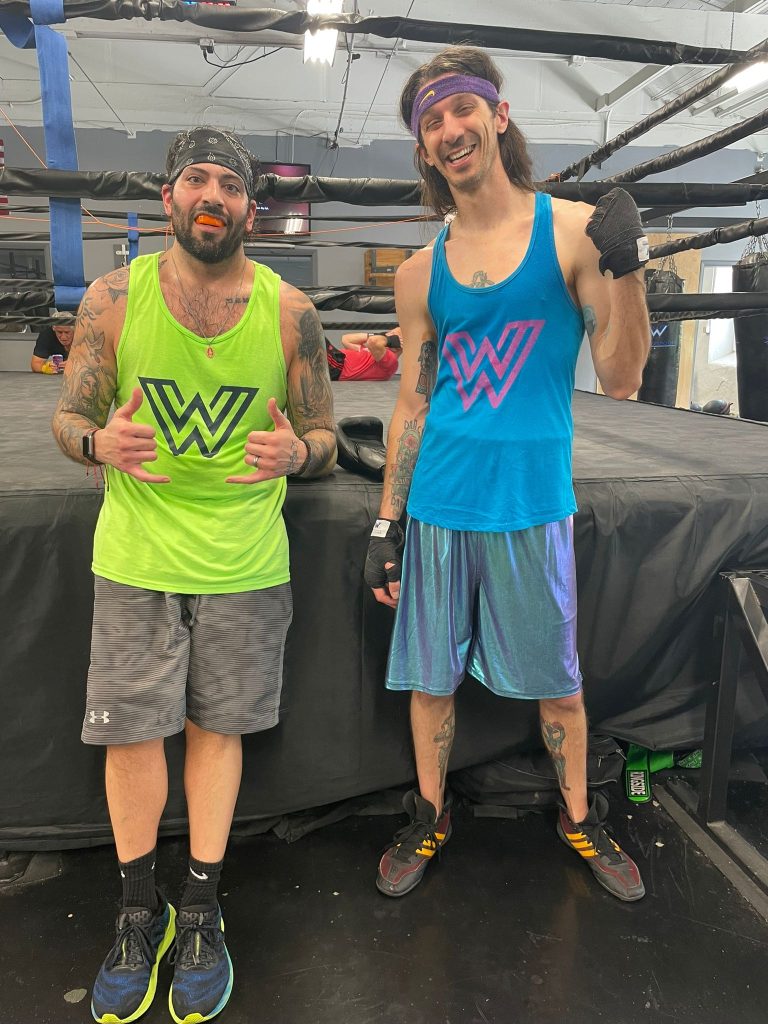
Ready to Throw a Real Hook?
Reading about technique gets you maybe ten percent of the way there. The other ninety percent happens on the floor, with a coach holding the mitts and calling out what your eyes cannot see. Stop guessing at your form. Come throw your first proper hook with people who have been perfecting it for two generations.
Have a question first? Reach us at (215) 458-8773, email info@witherspoonboxing.com, or use our contact page. You can also read more about our story on the about us page, catch gym updates in news, or browse more training guides on the blog.
APPLY NOW — CLAIM YOUR FREE FIRST CLASS
Witherspoon Boxing + Fitness — 925 Canal Street, Door 19, Bristol, PA 19007 — Bringing Out Everyone’s Inner Champion.
Proper boxing technique also depends on fundamentals such as stance, balance, footwork, and controlled movement. You can learn more about amateur boxing and boxing fundamentals through USA Boxing.