By Tim Witherspoon Jr.
6 min read
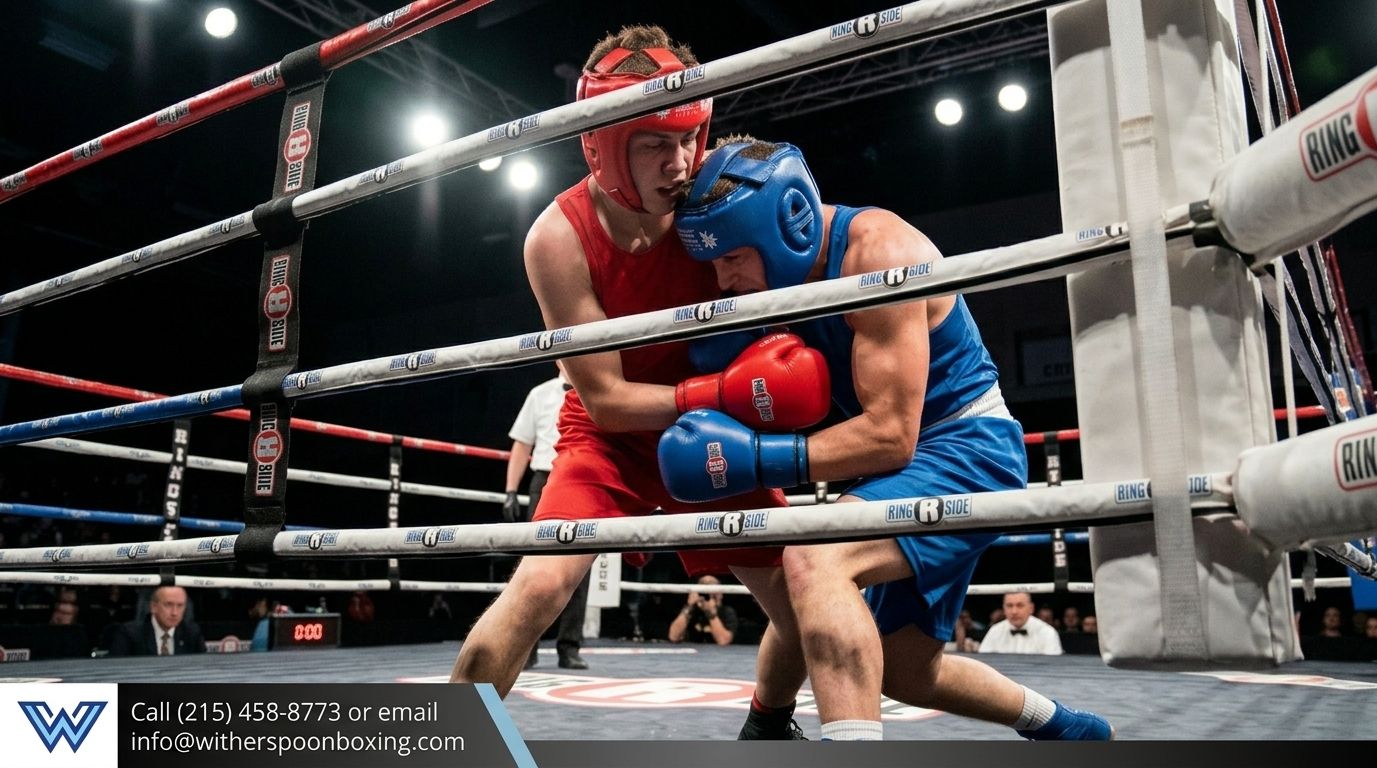
Is boxing safe? Non-contact boxing training — bags, pads, drills, and conditioning — carries injury risk broadly comparable to other athletic activity, with hands and wrists the main area to protect. Sparring and competition carry additional risk, including head impact, which is why both are optional, supervised, and gear-mandatory at any reputable gym.
Our coaches at Witherspoon Boxing + Fitness — the boxing gym Bristol PA has trusted for two generations — would rather answer this honestly than oversell. Here is the full picture.

Two Very Different Activities
Most of the confusion around this question comes from treating “boxing” as one thing. It is not.
| Activity | Head Impact | Main Risks |
|---|
| Bag and pad work | None | Hands, wrists, shoulders |
| Shadow boxing and footwork | None | Minimal |
| Conditioning classes | None | Standard exercise risks |
| Supervised light sparring | Limited, controlled | Head impact, bruising |
| Competitive bouts | Present | Head impact, cuts, injury |
The overwhelming majority of our members train entirely in the top three rows and never enter the bottom two.
Common Training Injuries
For non-contact training, the realistic list is short and largely preventable.
- Wrist and hand injuries. By far the most common, nearly always from poor wrapping or a bent wrist on impact.
- Shoulder strain. From overuse or holding a guard while fatigued.
- Knee soreness. Often caused by pivoting in cushioned running shoes rather than flat ones.
- Lower back tightness. From rotation combined with a weak core.
- Ankle rolls. From footwork mechanics or unsupportive footwear.
The American Academy of Orthopaedic Surgeons identifies proper technique, appropriate equipment, and adequate conditioning as central to preventing sports injuries — which covers almost everything on that list. Our guide on boxing injury prevention tips goes through each in detail.

The Head Impact Question
This deserves a straight answer rather than reassurance.
Repeated head impacts carry risk. That is why the sport has built-in protections: early referee stoppages in amateur competition, mandatory headgear in most amateur divisions, mandatory mouthguards, and strict skill matching in sparring. Research on head impact exposure across combat sports is ongoing and indexed on PubMed.
Two things follow from that:
- If you never spar, this risk does not apply to you. Bag and pad work involves no head contact whatsoever.
- If you do spar, defense matters more than padding. Learning to make punches miss reduces total impact far more effectively than headgear does — which is why our guide on boxing head movement drills is drilled heavily before anyone enters the ring.
Anyone with a history of head injury, concussion, or neurological condition should speak to their doctor before sparring. That conversation is not a formality.
How We Reduce Risk
| Measure | How It Works |
|---|
| Sparring is optional | Never required to be a member or progress |
| Beginner classes non-contact | No contact at all for months, often years |
| Structured warm-ups | Every class, no exceptions |
| Hand wrapping taught day one | Prevents the most common injury |
| Technique before power | Correct form prevents most strain injuries |
| Strict skill matching | Beginners spar only with beginners |
| Mandatory gear | Mouthguard and headgear, no exceptions |
| Coach-controlled intensity | The level is set by us, not the participants |
Is Boxing Safe for Children?
Our youth boxing classes for ages 6 to 12 are entirely non-contact. No sparring, no partner striking, nothing. Sessions run on bag work, pad work, drills, and games with coach supervision throughout.
That removes the head impact question for young athletes completely. What remains is comparable to any coached youth sport — and the CDC recommends children get at least 60 minutes of activity daily including aerobic, muscle-strengthening, and bone-strengthening work, all of which a boxing session covers.
Is Boxing Safe Over 40?
Yes, with sensible progression. The things that matter more with age:
- Never skipping the warm-up
- Starting at two sessions a week, not four
- Technique before intensity
- Taking recovery seriously
- Reporting joint pain rather than training through it
Our guide on boxing after 40 covers starting later in detail.
Soreness vs Pain
| Normal | Stop and Speak to a Coach |
|---|
| Muscle soreness 24–48 hours later | Sharp pain during a movement |
| Tired shoulders after holding a guard | Joint pain in wrists, elbows, or knees |
| Aching legs after footwork | Pain that worsens through the session |
| General fatigue | Numbness, tingling, or swelling |
If you have any existing injury or health condition, check with your doctor before starting and tell us what they advised. Coaches scale sessions to the person in front of them.
Training Safely in Bucks County
The boxing classes Bucks County members rely on all include structured warm-ups and coaching throughout:
- Beginner Boxing — Mon/Wed 9:00 AM & 5:00 PM, Fri 9:00 AM, Sat 9:00 AM
- Advanced Boxing — Mon/Wed 6:00 PM, Sat 9:00 AM
- Adult Boxing — Tue/Thu 12:00 PM
- Women’s Boxing — Tue/Thu 7:00 PM, Sat 11:00 AM
- Cardio Boxing — Mon/Wed/Fri 6:00 AM, Tue/Thu 9:00 AM & 5:00 PM
- Strength & Strike — Tue/Thu 6:00 AM
- Kids Boxing (Ages 6–12) — Mon/Wed 7:00 PM, Tue/Thu 6:00 PM, non-contact
- Sparring Lab — Mon/Wed 7:00 PM, Sat 10:00 AM, optional and supervised
- Recovery & Mobility — Sun 9:00 AM
See the full weekly schedule. Our boxing training for beginners program assumes no experience at all.
Our staff is led by Tim Witherspoon Jr., and the Witherspoon family has competed at the professional level since the 1970s. Two generations in the sport produces coaches who know when to push and when to tell someone to stop. Read more on our about us page or see the gym in our gallery.
Anyone searching learn boxing near me in lower Bucks County will find a genuine boxing fitness center here, where boxing and fitness are built on training people can sustain for years.

Frequently Asked Questions
Is boxing safe for beginners?
Beginner classes are entirely non-contact, so the risk profile is comparable to other coached fitness activity.
Do I have to spar?
No, never. Sparring is optional and many members train for years without it.
What is the most common boxing injury?
Wrist and hand injuries, nearly always from poor hand wrapping or a bent wrist at impact.
Is boxing bad for your brain?
Repeated head impacts carry risk, which is why sparring is optional, supervised, and gear-mandatory. If you never spar, you take no head impact in training.
Is boxing safe for kids?
Our youth classes for ages 6 to 12 are entirely non-contact and supervised throughout.
Is boxing safe if I am over 40?
Yes, with proper warm-ups, gradual progression, and honest reporting of any joint pain.
Should I see a doctor before starting?
If you have any health condition, injury history, or have not exercised in a long while, yes.
Is the first class free?
Yes. Gloves included, no membership required, no obligation to continue.
Come See How It Is Run
The honest way to judge a gym’s approach to safety is to watch a class. Come try one free session, see how coaches handle warm-ups and corrections, and decide from there.
Booking Is This Simple
| Step | What You Do |
|---|
| 1 | Click the red Apply Now button below |
| 2 | Fill in your name, email, and mention anything we should know |
| 3 | We call you back and confirm your free first class |
That is it. Gloves provided. No experience needed. Just show up.
👊 APPLY NOW — BOOK YOUR FREE CLASS
Prefer to talk first? Call (215) 458-8773 or email info@witherspoonboxing.com.
You can also message us on our contact page, read our story on about us, check gym updates in news, or browse more guides on the blog.
Witherspoon Boxing + Fitness — 925 Canal Street, Door 19, Bristol, PA 19007 — Bringing Out Everyone’s Inner Champion.
 Free every week