By Tim Witherspoon Jr.
7 min read
Most people treat recovery as whatever happens when they are not training. That is exactly backwards. Recovery and mobility for boxers is where adaptation actually occurs — the training itself only creates the stimulus. Skip this side of the equation and you plateau, stiffen up, and eventually get injured.
Witherspoon Boxing + Fitness is at 925 Canal Street, Door 19, in Bristol. We are the boxing gym Bristol PA and its surrounding townships have trusted for two generations, and our Recovery & Mobility session runs Sunday at 9:00 AM in our dedicated wellness space.
What Boxing Does to Your Body
Boxing is a rotational, repetitive, high-output sport. Over months of training, predictable tightness develops in predictable places.
| Area | Why Boxing Tightens It |
|---|
| Shoulders and chest | Holding a guard for round after round |
| Upper back and neck | Chin tucked, head forward, constant tension |
| Hips | Bent-knee stance held throughout every session |
| Thoracic spine | Repeated rotation in the same two directions |
| Calves and ankles | Time spent on the balls of the feet |
| Forearms and wrists | Gripping and impact absorption |
| Lower back | Rotation plus a slightly forward stance |
None of that is a problem on its own. It becomes a problem when it accumulates unaddressed for a year.
Why Mobility Makes You a Better Boxer
This is not just injury prevention. Restricted range of motion directly limits what your technique can do.
- Hip mobility determines how fully you can rotate into a cross or hook
- Thoracic rotation controls how much torso you can put behind a punch
- Shoulder range affects both your guard endurance and your reach
- Ankle mobility underpins your footwork and pivoting
- Wrist mobility supports correct alignment on impact
A boxer with restricted hips is leaving power on the table no matter how good their technique is. Our guide on how to throw a hook in boxing explains that rotation chain — mobility work is what lets you actually access it.
The American College of Sports Medicine includes flexibility and neuromotor work alongside cardiovascular and resistance training in its guidance for adults, and the CDC’s physical activity guidance similarly highlights balance and flexibility activities, particularly as we age.
What a Session Involves
| Component | What It Covers |
|---|
| Gentle warm-up | Light movement to raise temperature without fatigue |
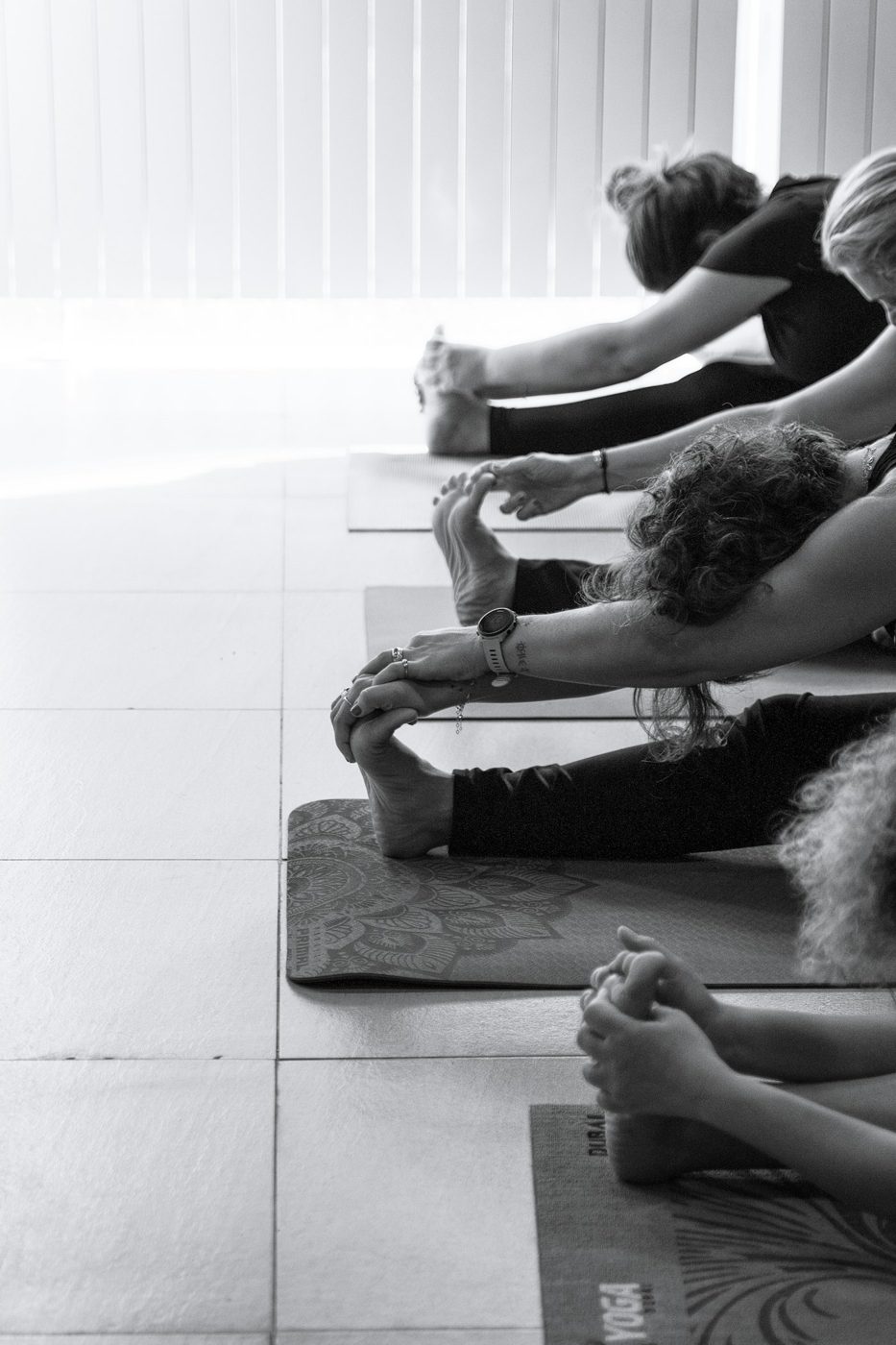
| Joint mobility | Controlled range-of-motion work through shoulders, hips, spine, ankles |
| Stretching | Held positions targeting boxing’s tight spots |
| Breathing work | Slow, deliberate breathing to support recovery |
| Soft tissue work | Where appropriate, using rollers or balls |
| Relaxation finish | A proper down-regulation to close the session |
It is non-contact, low intensity, and genuinely accessible. Nobody is pushed into a position they cannot hold.
Who This Session Is For
| If You… | Why It Helps |
|---|
| Train boxing two or more times a week | Offsets the accumulated tightness directly |
| Sit at a desk all week | Addresses hips, chest, and upper back together |
| Are over 40 | Recovery capacity matters more every year |
| Feel stiff rather than sore | Stiffness responds to mobility, not rest alone |
| Have plateaued | Restricted range often sits behind a stuck technique |
| Want a gentler way in | Non-contact and low intensity, a good first session |
Worth noting that last row. Some people come to Recovery & Mobility first, get comfortable in the gym, and try a boxing class a few weeks later.
The Rest of Recovery
One session a week helps, but recovery is mostly what you do the other six days.
- Sleep. Seven to nine hours. Nothing else comes close in effectiveness.
- Rest days. At least one between hard sessions when you are starting out.
- Hydration. Steady through the day rather than all at once.
- Food. A normal balanced meal with protein and carbohydrates after training.
- Walking. Light movement on off days beats total inactivity.
- Honest self-assessment. Know the difference between muscle soreness and joint pain.
Our guides on signs of overtraining in boxing and boxing injury prevention tips cover both of those last points in depth.
Soreness vs Stiffness vs Pain
| What You Feel | What It Usually Means | What Helps |
|---|
| Muscle soreness 24–48 hours later | Normal training response | Light movement, time |
| General stiffness | Restricted range from repetition | Mobility work |
| Persistent tightness in one area | Accumulated without being addressed | Targeted mobility, tell a coach |
| Sharp or joint pain | Potential injury | Stop, speak to a coach, see a doctor |
If you have an existing injury or health condition, check with your doctor before joining any new session and tell us what they advised.
Our Wellness Space
Recovery and Mobility for Boxers – runs in a dedicated wellness room, separate from the bag floor and the ring. The same space hosts yoga, breathwork, and sound bath sessions.
Having a genuine recovery space rather than a corner of the gym floor matters. It changes how people approach the session, and it means the environment actually supports down-regulating rather than competing with the noise of a class next door.
Building It Into Your Week
| Your Week | Where Recovery Fits |
|---|
| Two boxing sessions | Sunday 9:00 AM closes the week out |
| Three boxing sessions | Sunday becomes genuinely important |
| Four or more sessions | Sunday is non-negotiable at this volume |
| Desk job, little movement | Worth attending even if you train once |
Our guide on how many times a week you should box covers frequency alongside recovery.
What to Bring
- Loose, stretchy clothing you can move freely in
- Water bottle
- Bare feet or socks are fine — no trainers needed
- A towel if you prefer your own
No gloves, no wraps, no equipment. Just turn up.
The Full Weekly Schedule
Recovery & Mobility sits alongside the boxing classes Bucks County members rely on:
- Recovery & Mobility — Sun 9:00 AM
- Beginner Boxing — Mon/Wed 9:00 AM & 5:00 PM, Fri 9:00 AM, Sat 9:00 AM
- Advanced Boxing — Mon/Wed 6:00 PM, Sat 9:00 AM
- Adult Boxing — Tue/Thu 12:00 PM
- Women’s Boxing — Tue/Thu 7:00 PM, Sat 11:00 AM
- Cardio Boxing — Mon/Wed/Fri 6:00 AM, Tue/Thu 9:00 AM & 5:00 PM
- Strength & Strike — Tue/Thu 6:00 AM
- Bootcamp — Tue/Thu 6:00 PM, Fri 10:00 AM
- Kids Boxing (Ages 6–12) — Mon/Wed 7:00 PM, Tue/Thu 6:00 PM
- Sparring Lab — Mon/Wed 7:00 PM, Sat 10:00 AM
- Open Gym & Personal Training — daily
See the full weekly schedule. Our youth boxing classes for ages 6 to 12 are entirely non-contact, and our boxing training for beginners program assumes no experience at all.
Coached by a Championship Family
Our staff is led by Tim Witherspoon Jr., and the Witherspoon family has competed at the professional level since the 1970s. Two generations in the sport produces a particular respect for recovery — careers end early when it is neglected.
Read more on our about us page or see the wellness space and gym floor in our gallery.
Easy to Reach Across Bucks County
| Coming From | Approximate Drive |
|---|
| Croydon | 5–8 minutes |
| Tullytown | 8 minutes |
| Levittown | 10–18 minutes |
| Bensalem | 10–18 minutes |
| Langhorne | 12–15 minutes |
| Morrisville | 15–18 minutes |
Free parking on site, and Sunday morning traffic is nonexistent. Anyone searching learn boxing near me in lower Bucks County will find a genuine boxing fitness center here, where boxing and fitness includes the recovery side rather than ignoring it.

Frequently Asked Questions
When does Recovery and Mobility run?
Sunday at 9:00 AM, in our dedicated wellness space.
Do I need to box to attend?
No. Anyone can attend, including people who have never taken a boxing class.
Is it a yoga class?
It overlaps with yoga but is built specifically around the tightness boxing training creates — shoulders, hips, thoracic spine, and ankles.
Do I need to be flexible already?
No. That is rather the point. Everything is scaled and nobody is pushed into a position they cannot hold.
What should I wear?
Loose, stretchy clothing. Bare feet or socks are fine, no trainers needed.
How often should I do mobility work?
Once a week in a structured session, plus short daily work if you can manage it.
Will it help with stiffness from desk work?
Yes. Desk posture and boxing posture create tightness in overlapping areas — chest, hips, and upper back.
Is the first class free?
Yes, with no membership required and no obligation to continue.
Train Hard Six Days. Recover Properly on the Seventh.
The members still training in five years are the ones who took Sunday mornings seriously. Come try one free session, move properly for an hour, and start the week ahead of where you would otherwise be.

Booking Is This Simple
| Step | What You Do |
|---|
| 1 | Click the red Apply Now button below |
| 2 | Fill in your name, email, and mention Recovery & Mobility |
| 3 | We call you back and confirm your free first class |
That is it. No equipment needed. No experience needed. Just show up.
👊 APPLY NOW — BOOK YOUR FREE CLASS
Prefer to talk first? Call (215) 458-8773 or email info@witherspoonboxing.com.
You can also message us on our contact page, read our story on about us, check gym updates in news, or browse more guides on the blog.
Witherspoon Boxing + Fitness — 925 Canal Street, Door 19, Bristol, PA 19007 — Bringing Out Everyone’s Inner Champion.
 Free every week